 Posted by
 Matthias Lai, Staff Writer
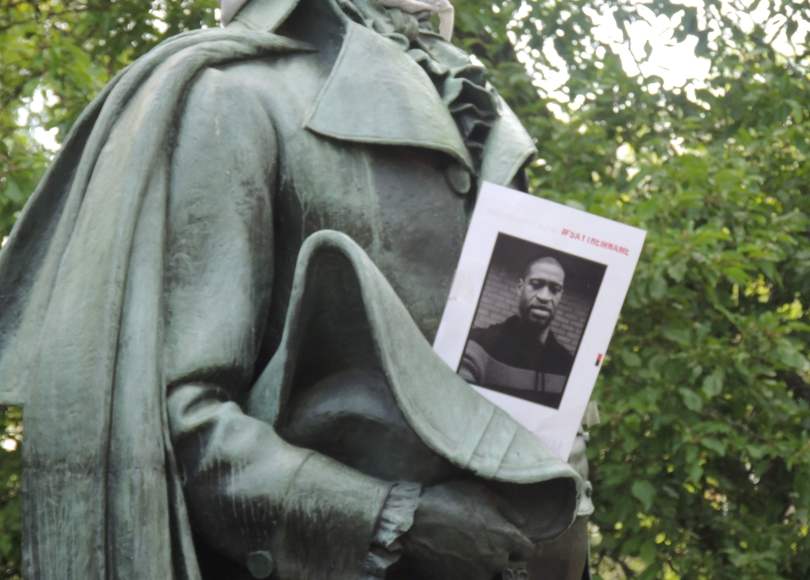
Oliver ten Broeke, Featured Photo
The death of George Floyd on May 25th at the hands of a Minneapolis police officer has struck a nerve with Americans across the nation, as protests have erupted in the largest cities in the country. Demanding police reform and an end to systemic racism in America, the Black Lives Matter movement has become the primary focus of news outlets, debates and the minds of Americans, replacing the Coronavirus as the nation’s greatest issue for millions of people.
That being said, we are still in a global pandemic, and social distancing is still highly advised to curb the spread of the disease. This begs the all-important question: How can one protest in a pandemic? Are the issues of racial injustice more important than the Coronavirus? And how can at-risk people participate in the Black Lives Matter movement? The answers are subjective, and depend on personal opinions, values and scenarios.
One of the most direct ways to participate is attending a protest. It also leads to the greatest likelihood of contracting the virus, as high concentrations of people are packed into one area. However physical protests create an atmosphere that can’t be matched by remote participation, according to those who’ve attended one. Taylor, who went to a protest in Poughkeepsie, says that, “Nothing feels as proactive as physically being a part of a protest. There is strength in numbers and it’s hard to ignore hundreds of people coming together to protest peacefully.” Ari, a student at NPHS shares that sentiment, saying that, “You just feel the emotions of everyone there.”
Not only is there emotion, but Mr. Cook, orator at a protest in Kingston, says that, “the compulsion to utilize the momentum of shite anger at George Floyd’s murder is too important at least for me to miss… this instance has finally made many [white Americans] upset enough to react. I can’t afford to waste the moment.” Cook, and thousands of others across the nation, see this as a rare opportunity for a united condemnation of racism in America, and see protests as the means of expressing it.
If you are attending a protest, it is advised by health officials from the Johns Hopkins Center for Health Security to get tested, wash your body and clothing after returning home, and wear a mask, even while indoors. It is also stressed to take social distancing precautions as much as possible while protesting, and to avoid contact like hugs or handshakes. Participants at local protests have been abiding by those recommendations, as masks can be seen on the faces of virtually all the protestors in New Paltz, Poughkeepsie and Newburgh demonstrations.
Unfortunately, there are people who can’t go to protests, whether for health, familial or logistical reasons. However, there are ways they can help without leaving the house. Mr. Cook says that the first step is to learn about the history of injustice in America. He offers the book The New Jim Crow by Michelle Alexander as a good place to start, and suggests that after reading the book it is important to look into the source material for deeper knowledge.
Another good way to learn is having intellectual discussions with people who are knowledgeable and experienced in the matter, listening to what they have to say and asking good questions to delve deeper. Learning from data and people’s differing experiences can open more standpoints and create depth in one’s personal convictions, which helps stem racism. Nik, an NPHS student asserts that, “It’s important not to avoid the discussion, because silence isn’t going to advance any movement”
After getting educated on the issues of racism in America, there are more active ways to support Black Lives Matter as well. Donating to organizations like the NAACP, the Black Lives Matter Fund or any of the organizations found HERE. Donating helps advance organizations which are fighting the long term battle of racism in America and gives them more resources to make a change.
Social media is also a place to show support, both by posting messages of solidarity and by opening discussions with people to help them understand what Black Live Matter calls for. This gives a greater reach for people who may be stuck at home. Another online method of helping out is signing and sharing petitions. Signing a petition takes 1 minute, but every voice counts. In a democratic country like America, the way to make a change is to express the support of many people toward a reform, and protests and petitions are two powerful ways to demonstrate the will of a large group of people.
Sharing petitions once they are signed is helpful because it begins a chain, if everyone who signs sends the petition to multiple people then more people’s voices will be heard. Some petition sites to check out are change.org or some of these SITES. One creative method of participating suggested by WIRED magazine is creating artwork celebrating the Black Lives Matter movement. They suggest making a banner or poster and putting outside of the house, a display of solidarity and support of the movement.
Other ways to help are exercises of mindfulness, from writing to authorities to supporting black businesses, and trying to change the narrative of racism from the bottom up, starting with a change in the mindset of each individual toward people of color.
There are many ways to help make a difference in the black lives matter, whether from home or at peaceful protests. The most important thing is to be safe, be educated, and be strong. Mr. Cook advises that people shouldn’t “work out of a sense of guilt or shame, [but rather] work with a clear eye toward justice and equity. That is the only way that America can move in the direction toward living up to the meaning of its creeds.”
Protests have been the catalysts for change in America since its founding, from the revolution, to the abolition of slavery, to the civil rights and women’s suffrage movements, and it won’t stop. For those looking to help, there are ways that everyone can contribute. And hopefully, the rising voice of the American people will create real, tangible changes for the better in this nation.
 The Maroon