
 Posted by
 By Josh Quinn, Staff Writer
Released on November 30, 2022, ChatGPT, a natural language processing AI, has suddenly come to the forefront of nearly every discussion on cheating throughout the school. Banned on all Chromebooks, and despised by everyone’s English teacher, ChatGPT’s reputation has become one of deception and fraudulence. However, there is a growing population of teachers who have begun to accept the AI’s existence and even praise its ability to help with menial writing tasks. But between all teachers, cynics, and sympathizers alike, there is a general consensus that ChatGPT’s results are often misleading or downright false.
For some, like computer science teacher, Mr. Hoss, ChatGPT has always been something he was excited about. As one of the few teachers that has actually used the website, he views the technology as something to be embraced, not shunned.
“I teach a computer science class,” Mr. Hoss said. “I’m in favor of software that does incredible things.”
As he spoke, his excitement surrounding the new software was obvious. However, it waned when the topic of false information was brought up. Using ChatGPT, he asked the AI what an asymptote (a mathematical limit in calculus) was, and although the answer was close, it was still an incorrect response. He was not surprised by this, and explained that “it [ChatGPT] gives wrong information all the time.”
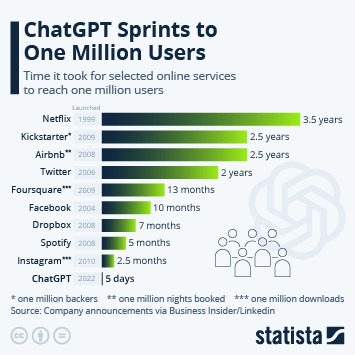
The inconsistent results which ChatGPT provides are known by frequent users of the AI. One anonymous student who uses ChatGPT to help with essays and math problems reports that they often struggle with the software’s inconsistent results, such as misleading answers about novels.
“It lied… about [the novel] Don Quixote. It said something that didn’t happen in the chapter,” the student said. They then considered the possibility that “maybe Knittel lied to us,” trusting ChatGPT over their beloved Spanish teacher.
After some very basic research, it was proven that their teacher was right and the AI was inaccurate. According to the student, before getting that response from ChatGPT, they had never before been concerned about getting misleading results from AI.
Some teachers are more concerned with the world’s future usage of AI than about students cheating. Mr. Cook, a history teacher at New Paltz High School, is incredibly worried about how AI may look in the future, and our motivations to create it in the first place.
“I have concerns about the insistence on developing AI. I think wanting to create consciousness is a little bit of a God complex on the designer’s part,” Cook explained.
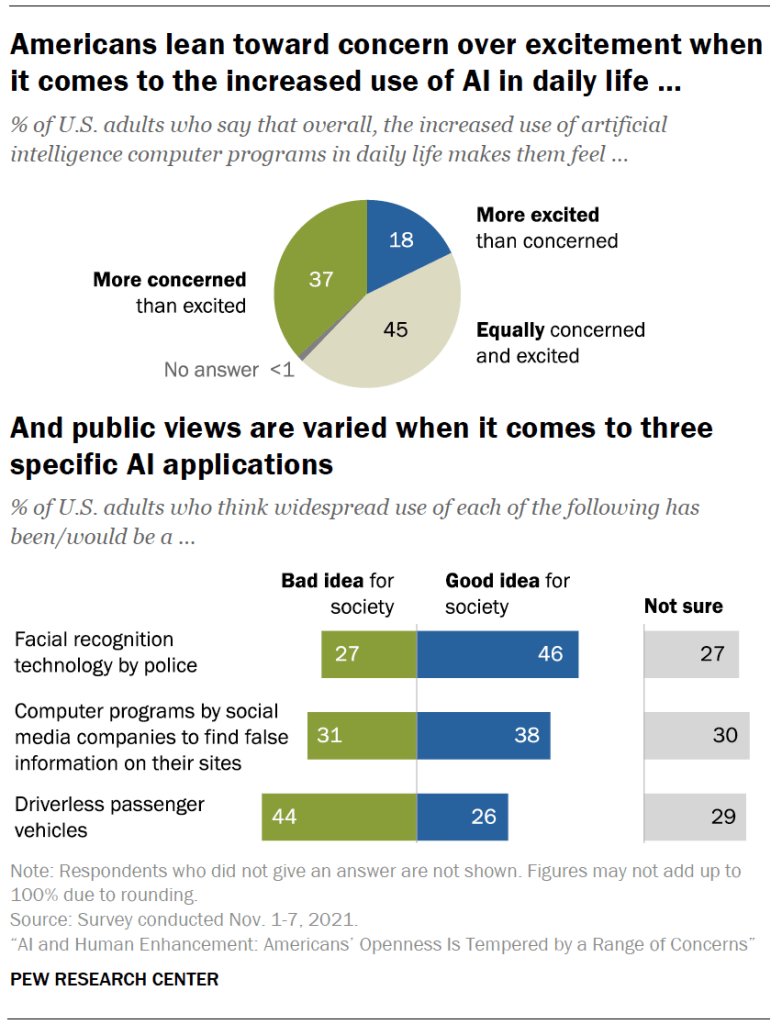
ChatGPT is not likely to gain sentience. As a natural language processing AI, it is very good at copying, but not creating. However, Mr. Cook is not alone in his concern over AI. According to How Americans Think About Artificial Intelligence, Pew Research Center, 37% of Americans are more concerned than excited about the increased use of artificial intelligence in everyday society. For Mr. Cook, his fear is based on the morals of humans keeping the AI as a prisoner. However, Cook does think that there are some features that may not only help humanity, but students in specific.
“You can have… a captive audience while you figure out your thoughts on something.” Mr. Cook expressed, detailing the questionable ethics of pursuing AI.
Unsurprisingly, most students don’t use ChatGPT this way, instead using the software to write their essays. One student gives ChatGPT the prompt for their essay and then uses Quillbot, an AI used for rewording and rearranging text, to refine ChatGPT’s response. This method reduced the time takes them to write an essay from hours to minutes. For some students, this allows them to have more free time outside of school, while others are more focused on relieving overwhelming academic pressure. The method is working: both anonymous students interviewed reported consistently getting 90s on essays they used ChatGPT for
Mr. Neden, who teaches AP Language and Journalism 1 and 2, has concerns about how ChatGPT is and will be used by students. Fearing the potential of bad habits being formed by simply copying and pasting prompts, he has begun to rethink some of his lessons and has organized for more writing to be done in class. While he is concerned about AI and its prolific use among teenagers, Mr. Neden does not think it will make English teachers obsolete.
“We have calculators, yet we still have math teachers,” Neden points out. Just as math teachers and calculators coexist, so will English teachers and AI.
It would be disingenuous to write ChatGPT off as absolutely good or bad or to focus only on its positive qualities whilst ignoring its issues. It is important to remember it is a tool, and the danger of tools lies in those who use it. Since time travel has yet to be invented, we are forced to accept ChatGPT’s existence as a new tool.
I wouldn’t be a good journalist if I didn’t finish this article using AI, so, to quote ChatGPT on its very existence: “Overall, while ChatGPT has the potential to be a powerful tool for communication and problem-solving, it is important to recognize the potential dangers of this technology and take steps to address them. As AI continues to advance, we must consider the ethical implications of these technologies and work to ensure that they are used for the greater good.”
 The Maroon