 Posted by
 By Lindsey Clinton, Co-Editor-In-Chief
Worldwide, 648 million people live in extreme poverty, surviving on less than $2.15 per day. Without sustainable incomes, families are unable to afford clean water or health care. Unequal distribution of income and poverty coupled with this has become the principal cause of global hunger.
The conversation of “global hunger” is one we have all heard of, yet the action taken to diminish this pressing issue is consistently insufficient. Hunger is more than just empty stomachs; it is intertwined with poverty, health systems, climate change, inequality, and so much more. Although this crisis was on a steady decline for about a decade, between 2019 to 2021, the number of undernourished people grew by about 150 million people, with main concerns from conflict, climate change, and the Covid 19 pandemic. To understand the overpowering effect world hunger holds on society, we must first understand its causes.
In developed, rich nations, the average individual spends 25% of their income on food. In poorer nations, this number rises to two thirds. Still, in both wealthy and poor countries, the average cost of an inexpensive, healthy diet has become unattainable for millions of people. As processed crops are cheaper to produce and farm due to the greater use of machines rather than human labor, the price of vegetables and fruits has risen dramatically. Now, more and more people only make enough money to afford processed and unhealthy foods.
The consumption of low-quality foods leads to micronutrient deficiencies and other serious health problems, hence why there are 14 million children suffering from severe acute malnutrition. National Liberty of Medicine explains that acute malnutrition stems mainly from two main problems: “inadequate food supply caused by social, economic, and environmental factors” and “underlying disease causing abnormal nutrient loss, increased energy expenditure, or decreased food intake.” Annually, malnutrition contributes to 3.1 million, or 45%, of the deaths of children under the age of five years old. South Asia and Sub-Saharan Africa are faced with the “largest global burdens of severe malnutrition,” but people in all regions suffering from high rates of extreme poverty face these concerns. Even when a serious health problem does not lead to death, it harms a child’s ability to grow, delay cognitive development, or remain healthy.
Along with children, marginalized communities like women and displaced people (asylum seekers, internally displaced people, and refugees) are more likely to face barriers to essential jobs, services, resources, and income. Because of this, they are also more likely to face food insecurities and related illnesses. Action Against Hunger finds that “Women and girls are disproportionately affected by hunger: in too many households, they eat last and least.” Displaced people are also at high risk due to many being forced to flee their homes because of conflict, hunger, and human rights violations.
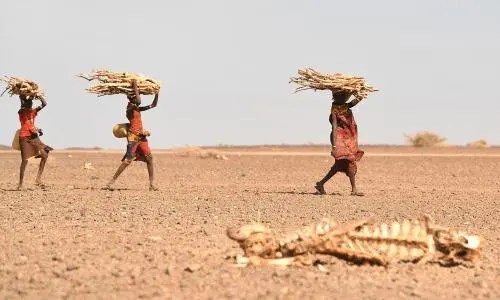
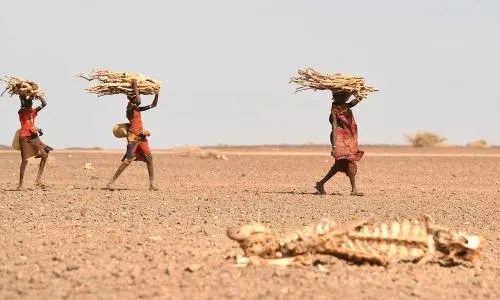
This all feeds into the infamous problem of climate change. Linda Thomas-Greenfield, a US representative for the UN says the climate crisis “directly leads to a food insecurity crisis. It makes it much harder to feed people.” With the rise in sea levels as well as global temperatures, there have been drastic increases in floods, heat waves, droughts, wildfires, and many other natural disasters destroying life and cities. The US Embassy explains that the “top two drivers of forced displacement globally” stem from conflict and weather events and are responsible for driving about 30 million people away from their homes. These new conditions and the destruction of infrastructure and natural land make it difficult for farmers to grow and distribute food, which has led to a recent decline in the production of cereal crops like corn and wheat due to plant diseases, extreme weather events, and the global water crisis.
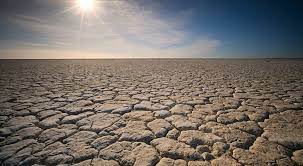
Taking a look at Africa alone, agricultural production has been on a decline of 34% due to climate change. A lack of rainfall in the Horn of Africa (the most affected countries being Somalia, Ethiopia, and Kenya) has caused four consecutive rainy seasons, with the expectation of the next to fail as well. This is the worst drought the area has faced in 40 years. The Food and Agricultural Organization finds that 80% of the causes behind the unpredictable harvest of cereal crops in areas like Africa’s Sahel are caused by climate variability.
Other countries with coastal farmlands, like Vietnam and Bangladesh, are facing the climate problem of rising sea levels, being flooded by saltwater in turn killing off rice crops. At the peak of the rainy season for Bangladesh, 40% of the country was underwater. Over 1.27 million homes were damaged or destroyed by the floods leaving people homeless and without many resources. This country is a perfect example of how intertwined each aspect of world hunger is with another, with Bangladesh remaining vulnerable to food shortages with 25% of their population considered “food insecure.” Bangladesh has a high population of those who are malnourished or underperform on many inequality indicators, “including major gender inequality issues.” Issues can range from education, work, healthcare, and gender-based violence. Although Bangladesh faces numerous problems within its own country, they still host over 800,000 Rohingya, or a stateless Indo-Aryan ethnic group, who fled from violence, now living in the world’s largest refugee camp.
As we can see, the issue of world hunger is not as plain and simple as it is made out to be. Global issues from violence and uneven distribution of wealth to health problems and climate change are all connected so tightly making it feel almost impossible to find a way to create positive change. It has been made clear that this change cannot be made in isolation and by only one individual. There must be global solidarity and a forceful push towards action taken to help mitigate hunger. Our governments must break the vicious cycle of conflict and social unrest and support those who flee from their countries out of fear and desperation. About 60% of the “world’s hungriest people” live in conflict affected zones. The UN World Food Programme is at the front lines of some of the worst war zones delivering lifesaving food to the people. Aside from addressing conflict, our governments too must address healthcare people receive, making it affordable for anyone how many need aid. Tied directly to this, the price and access to healthy and nutritious foods needs to be addressed. With proper healthcare and available food, the number of those suffering and dying from malnutrition and other health conditions would significantly diminish.
The list of governmental actions that need to be taken is endless, but for the individual, the first step to take said action is to become informed and educated on the issue. We cannot talk about this if we have nothing to talk about. Another choice you can make is identify where your own source of foods and produce are coming from. Supporting local farmers by shopping locally or at farm stands is quite simple to do in the Hudson Valley. This step ensures that farmers will have a better chance for a steady income as well as knowing that the food you put into your body is ethically and sustainably sourced. A third step you can take is to be mindful of your individual food waste. In high income countries, about 40% of food is wasted because people buy more than they actually eat. There are many other ways you personally can make an impact on the World Hunger Crisis but these can be some of the most simple things to do to start. I would also highly recommend watching this video from Action Against Hunger to continue to educate yourself on the lives world hunger directly affects.
 The Maroon