 Posted by
 By Sophie Brassard, Staff Writer
In the late 1700’s, high school sports were first established in the east of the United States. Since then, joining a team has become very common for students between 9th and 12th grade, and comes with numerous health benefits, both mental and physical. Athletes at New Paltz High School experience these effects first hand, and have the opportunity to strengthen their bodies daily. Engaging in these extracurriculars gives students the opportunity to improve work ethic and maintain diligence.
The New Paltz Huguenots participate in 17 different sports each year. Many of these sports have high enough enrollment to fill both varsity, and junior varsity rosters. This makes it possible for students of all ages and skill levels to be a part of a team, and play a game they love.
“I’ve learned the importance of hard work, and how it eventually pays off”
Gavin Tregila
Gavin Tregila, a 16 year old who attends NPHS, is a three season varsity athlete. “I’ve learned the importance of hardwork and how it will eventually pay off,” Gavin says, “No matter the sport, time and practice will help you to improve everyday.”
In the fall, Tregila is a dedicated member of the football team. To prepare for the season, players start practice in the final weeks of August. The excruciating schedule includes 4 hour practices that begin only as the sun is rising. Before the session ends, temperatures regularly reach the mid 80s. More often than not, each player leaves the field looking like they stepped out of the shower, the heat of the sun drenching their bodies in sweat. Does the early start to the season eventually pay off?
The scholar athlete also remarks on the relationships he’s made throughout his career. “I’ve made a lot of friends through sports. I met some of my closest friends when we played little league and we still play on the same team today.” Gavin adds, “Especially with hockey, I’ve had the opportunity to meet a lot of guys who don’t go to New Paltz. If I didn’t play hockey, I would have never known them.”
Because his own high school lacks a hockey team during the winter season, Treglia signed a waiver to play under FDR until he graduates. In addition to Gavin, 2 other NPHS students do the same. During the fall and spring, FDR is seen as a rival to New Paltz students, but this unique situation brings together many players from different backgrounds.
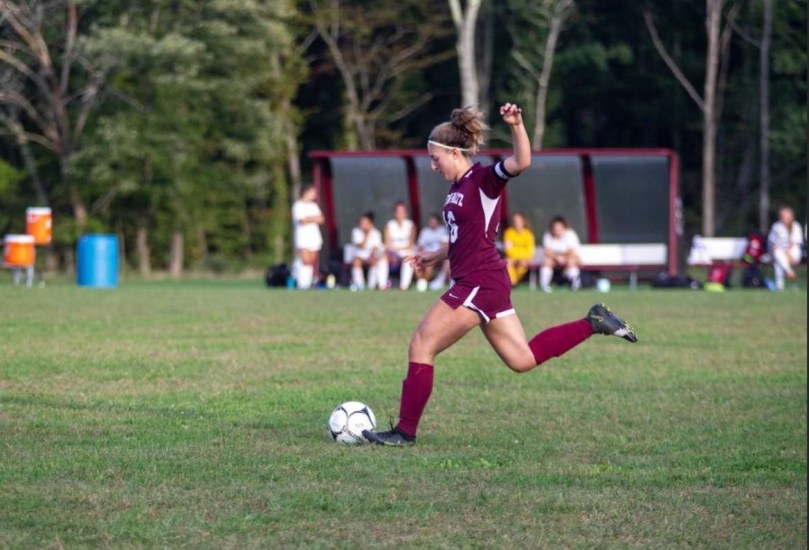
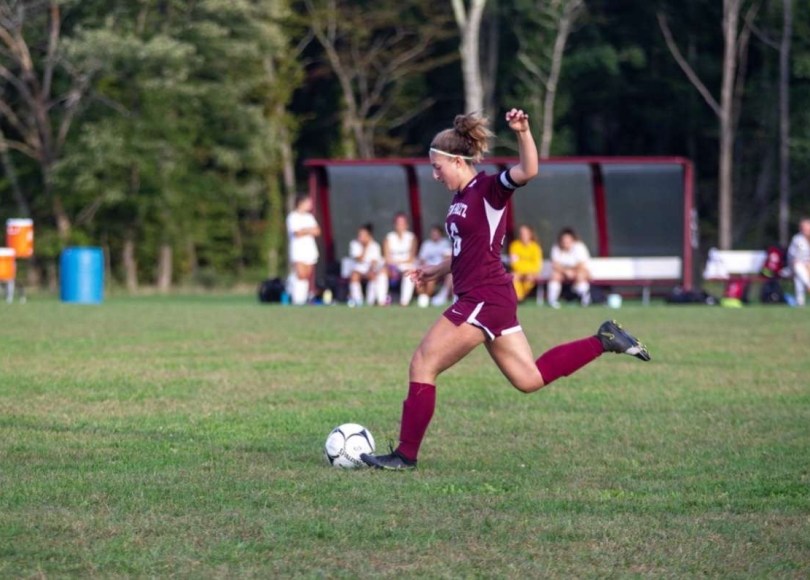
Keith Walker has been coaching soccer for over 20 years all over the Hudson Valley. The past several have been spent with New Paltz’s girls varsity team. As a man with decades of experience he says, “Playing a sport can help develop time management, leadership, and accountability.” It’s not abnormal for student athletes to have an advantage when applying to college, compared to students who are un-involved in sports.
Naturally, students who participate in sports are tasked with the difficult struggle of juggling both their academic and athletic endeavors. With practice and games following the dismissal bell, homework is put off for most until later evening hours. Finding time to study and complete assignments is certainly a challenge when fighting the urge to fall asleep. Although difficult, having a schedule will increase orderliness and efficiency that will be useful after graduation. Confirmed by The Washington Post, “Recruited athletes receive the largest admissions advantages independent of academic merit.”
Former Division III athlete, Carly Lopergolo, agrees with Keith’s statement. After playing 4 successful seasons of soccer at Our Lady of Lourdes High School, she felt compelled to continue her career as an athlete. Now 28, she shares one of her biggest takeaways from playing at Springfield College in Massachusetts. “Even if you’re not a starting player, you are still a crucial part of the team,” says Lopergolo. “For me, that was a hard lesson to learn.”
When participating in sports, there is no doubt that each member of the team wants playing time. But to earn minutes on the field, hard work is a must. In her off season, Lopergolo spent many early mornings at the gym. Lift sessions started at 5 am, and were mandatory for all players. As dreadful as it sounds, the extensive hours paid off. Not only did she find the importance of holding herself accountable, but her peers too. Each member of the team was counted on by both the coach and fellow players.

In addition to Lopergolo, Tom Shanely (39), also knows what it’s like to play a sport at the collegiate level. As a young man, he grew up with a love for baseball. When he had the opportunity to go Division I and commit to George Washington University, it felt like the perfect fit. When he looks back on his experience he remarks, “You’re just a small fish in a big pond.”
Across the country, there is an incomprehensible amount of players with talent. The jump from playing a sport in highschool to college is something that takes adapting to. Both Shanley and Lopergolo acknowledge that the transition does not come easy, but both have come to understand that with effort and determination hard things can be accomplished. Throughout their journeys, the former collegiate players have gained numerous relationships, improved their fitness, and learned the significance of having the right mindset.
“Playing sports obviously has its physical benefits, but I think the mental benefits are just as important,” expresses current student athlete, Gavin Treglia.
 The Maroon