 Posted by
 By Trey Nitza, Staff Writer
Remember when we all thought that movie theaters were going to die? During the Covid-19 pandemic, it felt like everything as we knew it was changing, and movies were no exception. Everyone started to make predictions about how the Coronavirus was the executioner that was going to deliver a final blow to an industry that’s been slowly dying for a while. That the new medium for releasing movies would be on streaming services. And this was perfectly justified. Streaming seemed like the clearly easier and cheaper option rather than the theaters, earning an advantage when everyone was trapped in their homes. I remember waiting for the announcement that our own New Paltz Cinemas were going to be forced to shut their doors for good during that seemingly ever-extending lockdown.
This crisis really heightened a lot of fears people had over the film industry as a whole. It exposed not just how fragile movie theaters seemed to be, but how fragile the creation of original movies seemed to be. If we were stuck with just streaming for the rest of our lives, did this mean we were stuck with generic, cash grab movies forever too? So how is the film industry as a whole doing? Should we be concerned with the state of movies, or are these problems out of our control? Will they even affect us? This is what I wanted to explore.
“Content”
“The art of cinema is being systematically devalued, sidelined, demeaned, and reduced to its lowest common denominator, “content,” says director Martin Scorsese, opening his essay for Harper’s Magazine. He’s certainly not alone in his assessment; it’s a growing concern that’s seemed to blow up in the 21st century. The streaming industry has certainly aided in, if not created, this trend in the industry and fear. When movies were harder to make without modern technology and software, and only being released in theaters, they were significantly less accessible, yes, but seemed to distinguish movies as an art form a lot better.
Now, we can watch movies anywhere, anytime, and countless more studios can pump out movies way easier than around the 1900’s. While I shouldn’t complain about more of these things I love being released, it can be a little… overwhelming. I can barely keep track of all the theatrical releases nowadays, let alone Netflix, Hulu, or HBO Max originals online. There’s nothing wrong with watching a movie at home while also doing chores, being on your phone, or talking with people, but I think the fact that this is possible in the first place creates a bit of a risk. When movies are no longer confined to theaters and placed in phones and houses, what distinguishes them from any other kind of content? They seem to have been swept in the same bin as any other kinds of moving images: YouTube videos, TV, or an Instagram post. When Scorsese’s The Irishman was released on Netflix, was it added for artistic value, or for the fact that it would feed into their algorithm to supply audiences with more moving pictures and keep subscribers?
“Overcommercialization”
After releasing his critically acclaimed film Joker in 2019, director Todd Phillips sat down in an interview with other directors for the Hollywood Reporter. He explained the difficult, year-long process of getting this movie made: a grim, R-rated “superhero” project whose titular character has practically always been associated with children’s material.
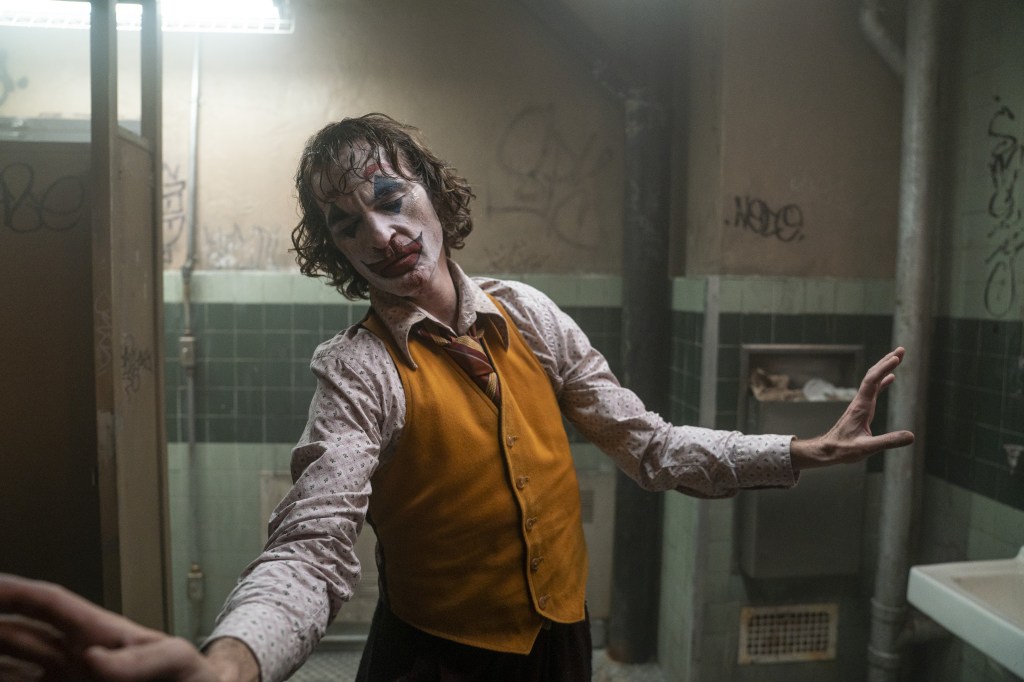
He said, “there were emails going back and forth saying: ‘does [Phillips] realize that we sell Joker pajamas at Target?’ And I’m saying, don’t movies come first, and pajamas come second? Are the pajamas dictating the movies?”
Funnily enough, Martin Scorsese was also there, shaking his head.
I think this highlights a crucial conversation around the state of movies today. Movies have always been made to make money. That’s the core of the industry. The problem is when studios realize that movies centered around previously known media simply make more money and appeal to a larger audience. So out of the Top-50 grossing movies from the last decade, only 3 are completely original projects. Not a remake, reboot, adaptation, or something part of a franchise. There’s nothing inherently wrong with this, since these other 47 projects have artistic value in their own right, but when these massive blockbusters and spectacles rarely fail to continuously rake in millions, I get scared that studios see this as the only favorable option to succeed, undermining and directly interfering with other films and artistic visions that aim to succeed self-sufficiently. Plus these movies tied to other pop-culture properties can tend to be muddled down to a formulaic project riddled with studio interference, in order to ensure a satisfactory profit. I think this is the core of most film-fanatic’s fears. And I think it’s perfectly justified. Regardless of the quality of the movie, I think it’s fair to be concerned with the studio’s perceived reliance on projects that are attached to some other creative material. Joker pajamas at Target represent this alarmingly dominating trend of the film industry.
In Conclusion
A movie release that excites me is 2021’s Dune. Awaiting a postponed theatrical release after the seemingly near death of cinema during lockdown, this blockbuster made a huge profit of $405 million dollars, being the 12th highest grossing movie of 2021. This film is an almost 3 hour long sci-fi movie with giant space worms and unconventional filmmaking techniques, and that was based on a book believed to be impossible to adapt. Yet it ended up making more money than Marvel’s The Eternals and instantly earned a sequel. It’s easy to think that the average American movie audience seems to only appreciate mind-numbing action movies, but a release like Dune being successful demonstrates that unique and genuine movies can still succeed, and opens the doors for more out-of-the-box projects to get made.
Still, the situation seems to be pretty bleak. On top of what I’ve talked about, artificial intelligence is starting to get a say in the film industry. James Dean is being revived with CGI to co-lead a new war movie. Movie ticket sales are statistically still probably going to decline. And yes, movie theaters very well might die at some point in our lifetimes. So yeah, things can seem rough. And studios are always going to want money. They are always going to seem to want to sacrifice artistic freedom for formulaic success if the situation presents itself. A movie like Joker is always gonna be fairly hard to get green-lit. But audiences are also always gonna want, well, good movies.
Remember when we all thought that movie theaters were gonna die? …that didn’t happen, did it? Movie theaters are still alive, still making money like usual. To me, it seemed like they survived the impossible. But why? How has this almost seemingly outdated, overly expensive, and irrelevant practice of ours managed to still make it? Well, because people like to watch good movies. They want to experience good movies, not just consume them through a streaming service. People want movies that astound them, movies that challenge their preconceived ideas, and movies that make them want more. And that drives the industry more than anything else.
 The Maroon