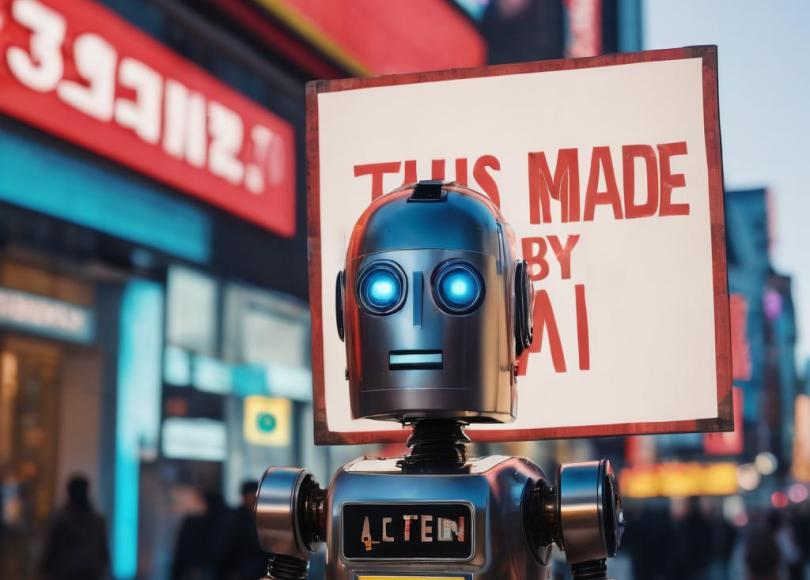
 Posted by
 By Lila Ackerman, Staff Writer
Prepare to be amazed and slightly terrified as the art world falls under the calculated and pixelated spell of artificial intelligence (AI). Move aside Picasso, Van Gogh, and that artsy-fartsy guy from your neighborhood, because AI is about to showcase its algorithmic wizardry. With its uncanny ability to paint, sculpt, and compose, AI is boldly staking its claim in the art realm. Brace yourself for a world where robots discuss brush strokes, AI-generated masterpieces fetch outrageous prices, and art critics are left scratching their heads, wondering if they should review the latest exhibit or apply for a software engineering job. Get ready, folks, as AI takes a Picasso-sized leap into the wild and wonderful world of art!
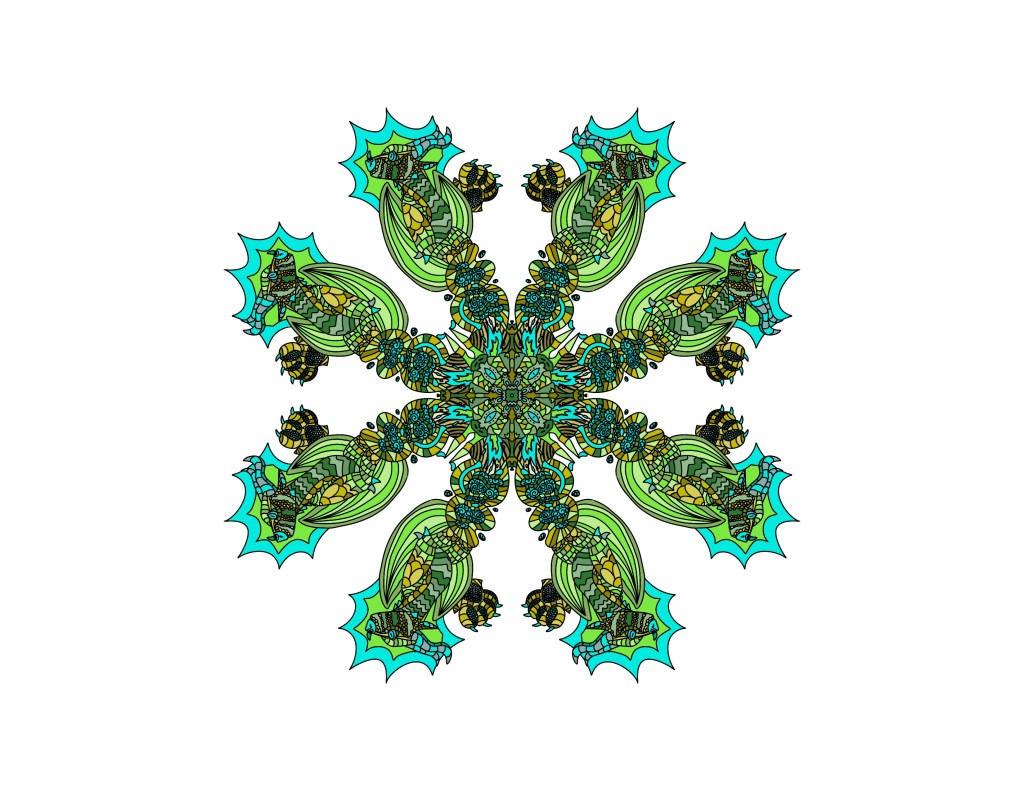
Maybe it is best to go apply for that software engineering job, as A.I. recommended above, because A.I. wrote that opening paragraph. In fact, even software engineers should look out—AI is being trained to write code. People are astonished at AI’s ability to create persuasive writing that is virtually impossible to differentiate from prose written by humans.
This concept is similar to A.I.’s art and artistic impersonation, which is just a tiny sliver of its potential in all industries. As the art world and the world of AI progress every day, artists have differing opinions on whether artificial intelligence and its ability to produce original pieces are a positive or negative breakthrough. Art students are also questioning their career paths and how AI could have a major effect on their future.
Some artists believe that embracing this new technology can give way to new, unique, and creative possibilities that can further their success. For example, ‘computer musician’ Holly Herndon is experimenting with A.I. imitating musicians’ voices and songs. She created Holly+TM, a voice model A.I. that’s trained on Holly’s voice, and it can render any song into her own voice. She has since made the software public. Mat Dryhurst, one of Herndon’s partners, brings up an important question: what does it mean to be an artist when anybody can create like you?
Many other artists, however, are nervous about its capabilities. Free online A.I’s are now capable of not only making original art based on a prompt but also copying an artist’s style. Using Crayon, an A.I. visual art generator, I inputted Taylor Swift in the style of different famous artists, and here are the more successful outcomes:
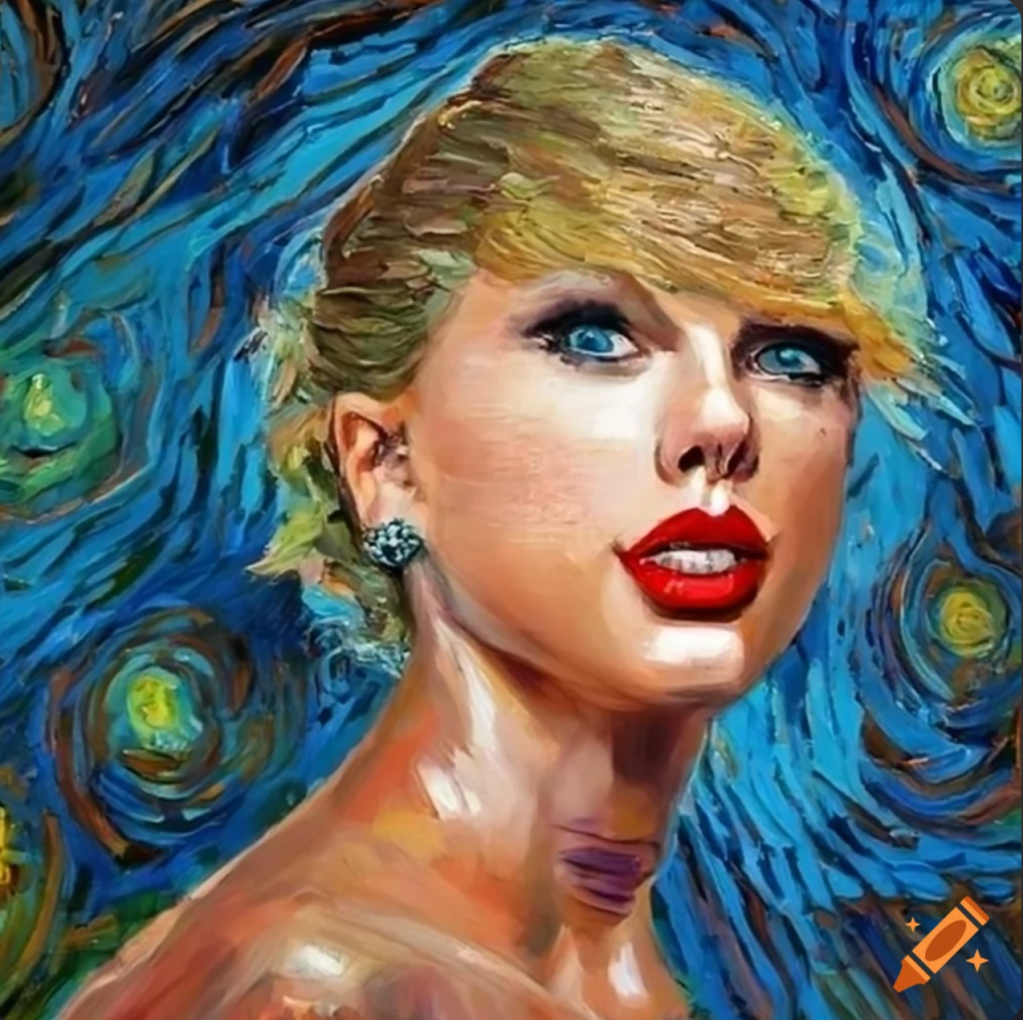
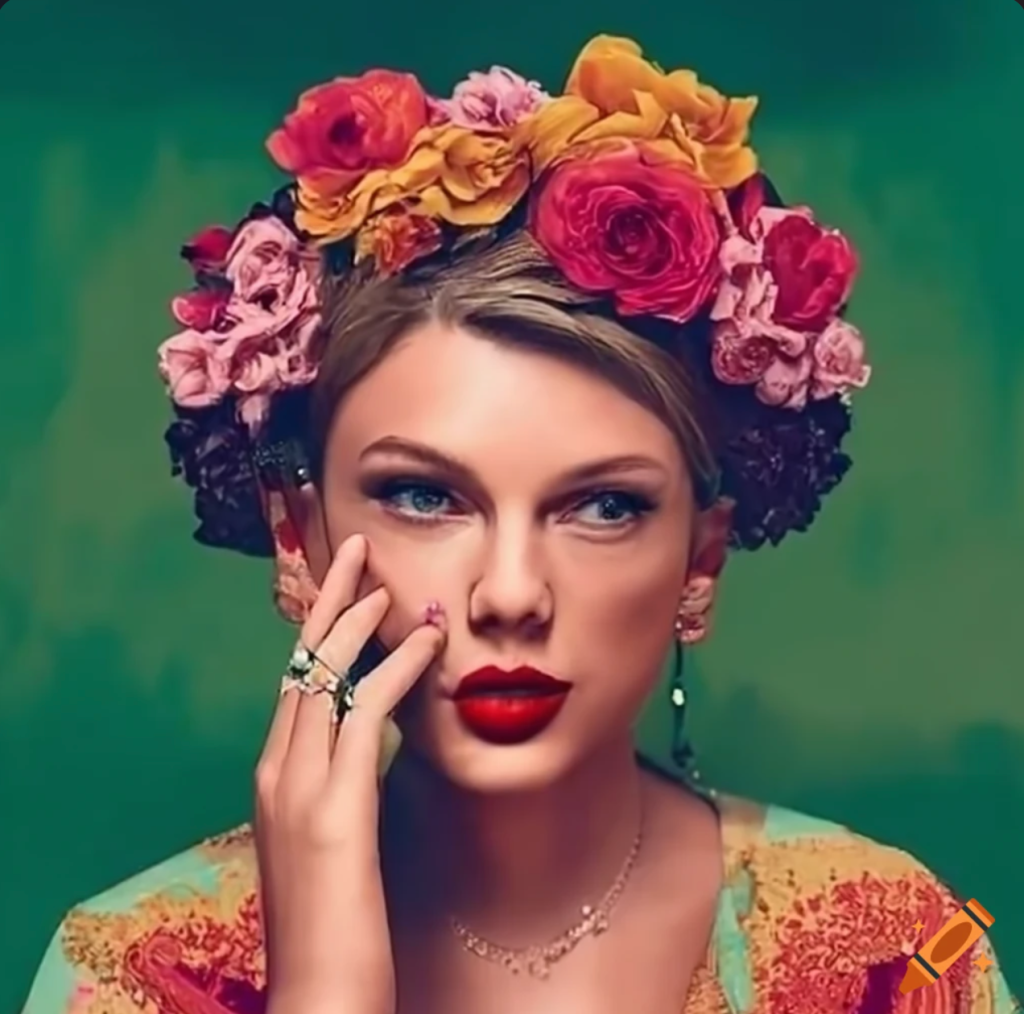
Can you tell which artists these are supposed to mimic? You could see how AI could pose a threat to living artists by appropriating their styles or even replacing them entirely. Why create art when AI can output original pieces in a matter of seconds? Whether you want to become a musician, a painter, or a coder, AI is advancing frighteningly fast.
The way that these creative AI applications work is by inputting billions of already-made pieces of publicly available art and using them as a basis for creating new material. Therefore, although the art used is public, it raises the question of whether it’s ethical for A.I. companies to sell products that are based on others’ work.

Fervent talk about AI has been circulating around the internet recently and is causing students to think about their future professions. I talked to Aili Zissu, who is a senior at our school and majoring jointly in art. She has experimented slightly with AI, but mostly as a joke. “I think one of the really beautiful and important things about art is the deep human involvement, emotion, and handiwork that, in my opinion, cannot be recreated by anything but a human being.” Although Aili believes that “it’s highly unlikely that any artists are pro-A.I. art and will push back pretty hard against A.I. involvement in art”, she has considered a backup plan. “I’m actually planning to double major in some biomedical, science, or global health-related field, so that would be my other option.”
Laurene Pountain, an art teacher at our school, said that for students like Aili in the field of art, it’s important to be true to your individuality and artistic integrity. According to Pountain, “[A.I.] can be a useful tool. But I don’t think it will take over. A.I. can help get you to where you want to go if you choose it, but it cannot truly think like a creative person can.”
Some believe that A.I. isn’t capable of replacing those ‘safe’ professions like medicine and law, but according to Reuters, it is “quite feasible that rote and generic work of law in the future will primarily be handled by A.I.” Although this may be the case, I believe AI will never be able to recreate the emotion and affection people in the health industry have, for example, and the compassion that comes with judging a case. So is your future one with AI in it?
 The Maroon