 Posted by
 By Callie Borello, Writer

Student-athletes all around New Paltz High School are constantly struggling to balance their school work, sports commitments, and social life. While the quest to find balance is real, they are still thriving.
“I find myself staying up late at night after coming home from late games,” Lyla Laffin, 16, a junior says, “after being expected to shower, eat, talk to friends, do homework, and be a human.”
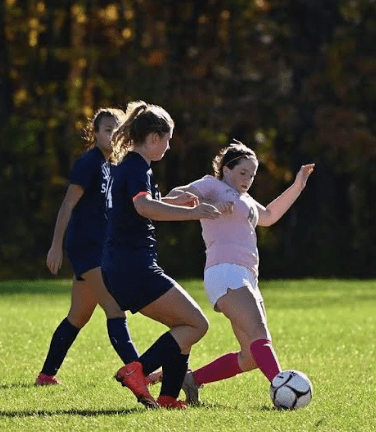
Lyla, a scholar athlete, is experiencing similar issues as many other students who are maintaining a high GPA and giving their best performance for their teams. Lyla is on the Varsity Soccer team as well as the Varsity Lacrosse team, which leaves her schedule very full.
Right along with Lyla and many other student athletes, Ella McDonough, 17, a senior at New Paltz High School, also makes the space to do the things she enjoys besides sports, like things just as simple as hanging out with her friends.

“Being a student-athlete has helped me gain more friends and create stronger bonds with my teammates,” McDonough says.”
Ella is on the Varsity Volleyball team as well as a club volleyball team outside of school, and is one of the team captains of the Varsity Softball team. She smiles while remembering her teammates, and the memories they have made.
Ella’s softball coach, Brooke Graham, who is currently in her 10th year of being a coach at the New Paltz High School, was also a student-athlete at the New Paltz High School. After being a gym coach, volleyball coach, softball coach, a high school and college student-athlete herself, Graham understands how stressful, yet rewarding, being a student athlete can be from multiple perspectives.
“Coaches should be able to have open and honest conversations about everything,” Graham says, “they should also be able to realize that school always comes first because they are a student-athlete.”
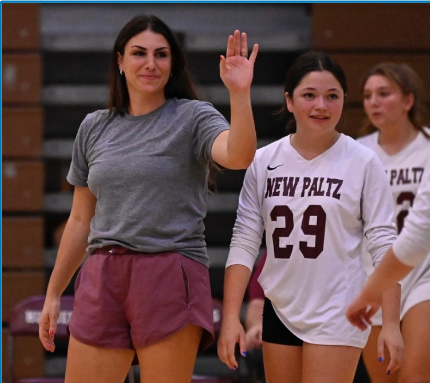
Similar to what Graham said, Lyla also thinks that if teachers saw the commitment of a student-athlete, there would be positive relationships between students and teachers.
“Teachers need to put themselves in our shoes to think about how we have lives and things to do. We have jobs and commitments just like they do, not just the work that they give us,” Laffin says, “if they truly understood and saw what we see then there would be stronger relationships between students and teachers. There would also be more productivity in the classroom, resulting in less stress due to lower workload if teachers saw what we see.”
 The Maroon