
 Posted by
 K-pop. I bet I’ve got one of a few reactions out of you right now: excitement because you love it, ambivalence with slight interest or slight disinterest, or a full-on groan. I hope the response isn’t “are you kidding me”, but I’ve been a k-pop fan for nearly five years now, and so, my friendly neighborhood naysayer, I intend to prove you wrong. (There’s a lot of names in this article, so just try to remember what’s bolded.)
The Many Genres Of K-pop
When someone talks about “pop” in an American context, we think we know the sound. Upbeat, bright, dancy, maybe even empty of meaning? Of course, this isn’t the case, as pop music is extremely varied. The label of “k-pop,” which we think we know so well, encompasses dozens of genres. Here are just a few examples:
Acoustic “Fine,” by Taeyeon talks about her depression after her friend Jonghyun’s tragic death and the pressure of fame after debuting in popular girl group Girls Generation, similar to the gentle singer-songwriter grief of Taylor’s Swift’s “marjorie”.
Gospel-influenced “Holy Water ” by Taemin is a powerful rumination on forgiveness, religion, and guilt, a mixture between touches of more sweeping Japanese balladry and the powerful cry of Hozier’s “Nina Cried Power”. *

Bottom L-R: Marjorie, Nina Cried Power, Zombie, Chance, Breathin
Rock “AZALEA” by Rolling Quartz is full-on-furious, adapted from an old poem protesting the Japanese occupation of Korea, a more classic rock spin on “Zombie” by the Cranberries, which itself protests English invasion in Ireland.
Lo-fi “Because” by OnlyOneOf is a nostalgic, wistful, coffee-shop recollection of a summer love between two boys, that, in a country where gay marriage is not yet legal, is a statement in and of itself, echoing “Chance” by Hayley Kiyoko.
And ethereal “When This Rain Stops” by Wendy (of Red Velvet) is a beautiful, soaring reminder to not be too hard on yourself and take a break, written after a stage accident that led to a nearly two-year hiatus, reminiscent of Ariana Grande’s “Breathin’”.
Other songs incorporate reggae (Wonder Girls’ chill “Why So Lonely,”), hip-hop (Stray Kids’ defiant “MIROH”), R & B (Mamamoo’s jazzy “Decalcomanie”) or metal (Seo Taiji’s off-the-walls Internet War) etc, etc, etc. They all fall under the “k-pop” umbrella. Clearly, if they were in English, we wouldn’t be so ready to wave it away, so ready to consider all of it “pop,” and so ready to declare it all “soulless.” Can you imagine someone trying to put Van Halen and Lana Del Rey in the same category just because they’re both in English? No, you can’t. Generalizing the music of a country of 51 million people ( 1/7 the size of the USA ) into one genre just because it’s in a different language is not only wrong and discriminatory but just plain foolish.

A Brief History Of The Genre
Look, some k-pop songs are bad. I’m not going to deny it. Every genre has its duds, and often the most popular of the genre is just the most widely palatable to the general audience. Why do you think it is that the English-language “Dynamite” by BTS is the song most people know of K-pop and not any of the ones I’ve mentioned above? Popular isn’t the same as “bad” of course; the two most well-known k-pop groups, BTS and BLACKPINK, are both talented, introspective, and enjoyable (Spring Day and Lovesick Girls respectively are evidence of that). In fact, it was a BLACKPINK song, Stay, that was the first piece I learned to play on the piano.
But if you don’t know k-pop well, you may think that these groups are not only representative of it as a whole, but also the beginning of the genre, which actually has five different generations. (Girls Generation and SHINee are second generation, BTS and BLACKPINK are third, OnlyOneOf and Rolling Quartz are fourth, and we’re approaching the beginning of the fifth.)

Seo Taiji and Boys, meanwhile, debuted in 1992, and are considered the birth of k-pop and part of its “first generation”. They became famous for their social commentary and introduction of both English lyrics and rapping into Korean popular music. In fact, one of the members of this band founded the agency that created BLACKPINK. Just because we weren’t aware of it in America doesn’t mean it didn’t exist or wasn’t meaningful.
The Internationality Of Music
Especially when listening to songs in other languages, we (myself included) can often fall into the trap of thinking that the meaning is unimportant as long as the song is catchy. But the meaning does matter, immensely. When a quick google search will tell us the depth of the work an artist has put into their music, don’t we owe them that for our enjoyment?
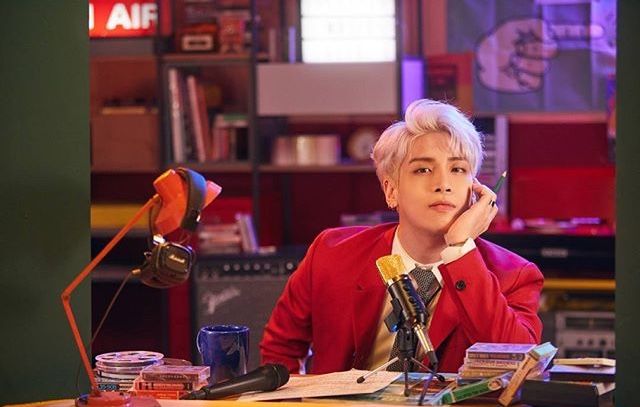
”Even though we can’t communicate using the same language, we use music instead,” the late Jonghyun of the band SHINee said in his book, a statement that’s held true for the thousands of fans (myself included) who have and still do connect deeply to his openness about the mental health struggles he faced. It was this openness that inspired his friend Taeyeon to write “Fine” in her grief after he tragically took his own life, and for the band mates that became his family, Taemin among them, to set up a foundation in his name to help other idols struggling like he did.

“From Now On” in honor of Jonghyun, 2018
“….He extended a hand through the lonely fog of the world to those like him…On his late-night radio show Blue Night, he’d read aloud his listeners’ stories of everyday hardship and heartbreak. It was alright to be sad, he often told us, alright to struggle, to be alone, and to not have easy resolutions for any of these things,” Victoria Hyunh wrote of Jonghyun in the Teen Vogue article “What SHINee Taught Me about Grief, Friendship, and Joy”.
In a world where many put down young women’s interests, and anything deemed “girly” as lesser, K-pop, at least for me, is a welcome reprieve that ( at its best, mind you) treats us like we are the norm and lifts us up instead. It celebrates friendship wholeheartedly and doesn’t see it as childish. And it’s one of few areas that actually takes us and our emotions seriously, and many K-pop songs deal with mental health struggles, like Sunmi’s Borderline, (G)I-DLE’s Allergy, or Jonghyun’s Let Me Out.
Advocacy And Protest

Taeyeon, though I’ve focused on her solo career, is actually best known for being the leader of the band Girls Generation, which debuted back in 2007 with “다시 만난 세계”, “Dasi Mannan Segye,” or “Into The New World”. Americans may not know this song, but Koreans do. A decade after it was released, it was used in a protest at a womens’ university where a couple hundred teenage dissenters faced 1,600 police head on and sang their hearts out in solidarity. After that, it’s been used in protests such as the 2017 Candlelight Democracy Demonstrations, celebrations like the 2019 courts’ decriminalization of abortion, and, even more tellingly, the anti-government rallies in Thailand in 2020, translated but the tempo kept the same.
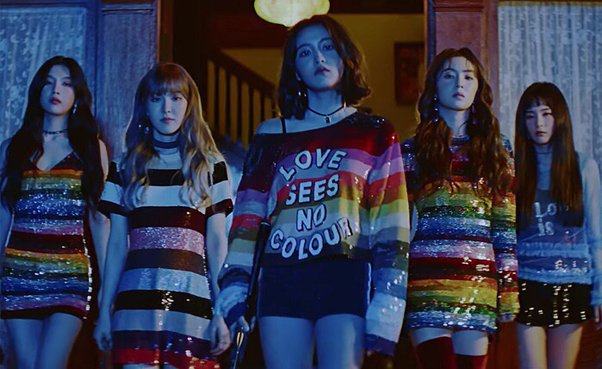
and “Love Is Love”
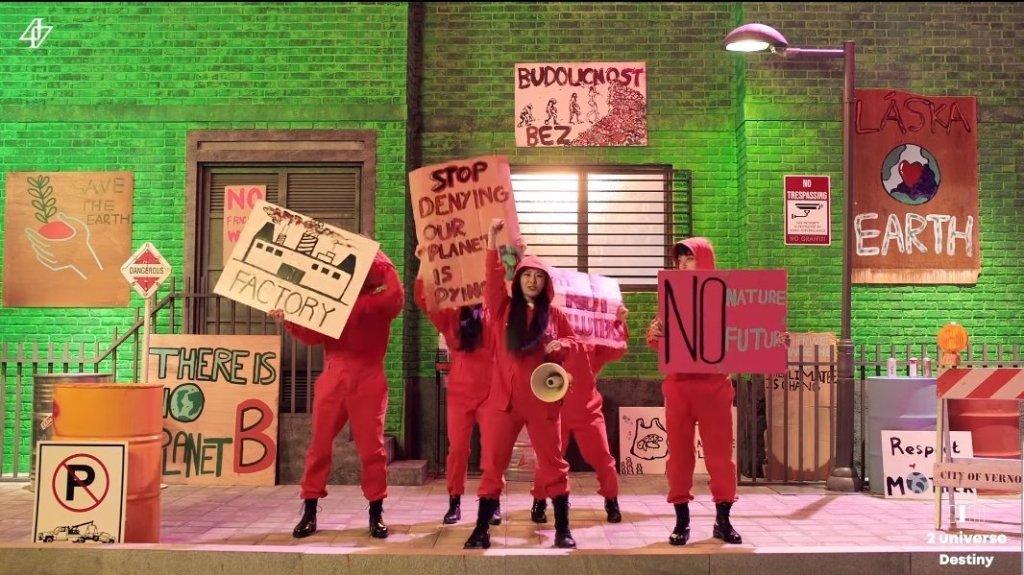

The Wall”, a song about standing against hatred and prejudice
Many groups have followed suit in creating songs made for protest, like Dreamcatcher, Mamamoo, or Red Velvet, and groups like BTS and BLACKPINK have made k-pop idols forces for change in Korea and all over the world. And if you ever happen to be at pride week in Seoul, there’s a good chance someone will be waving a rainbow flag and belting a K-pop song from the rooftops.
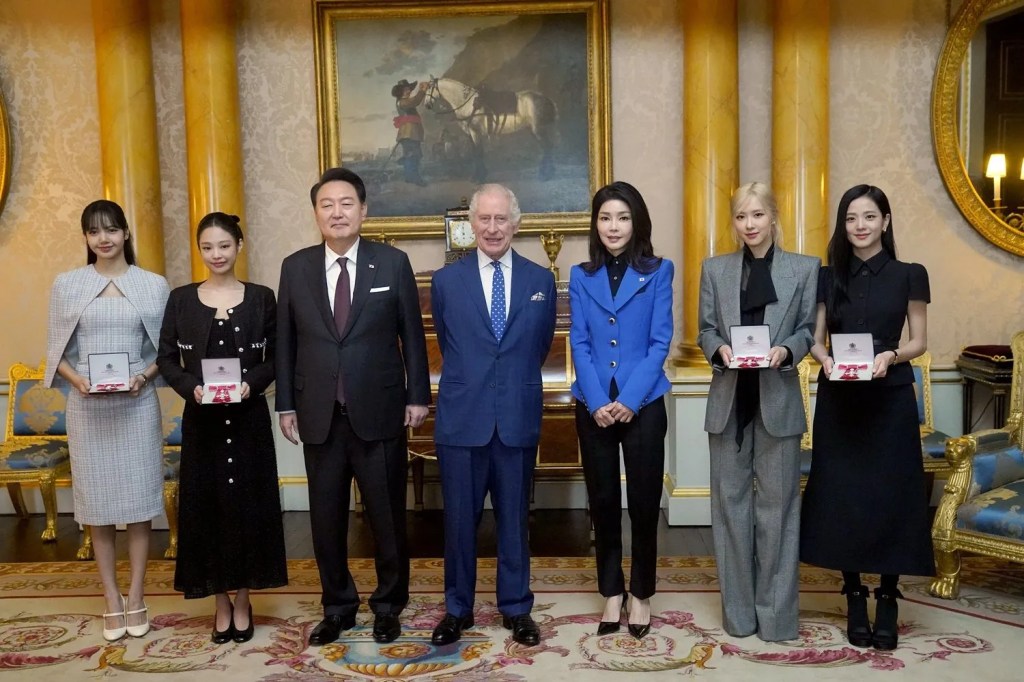
president of Korea
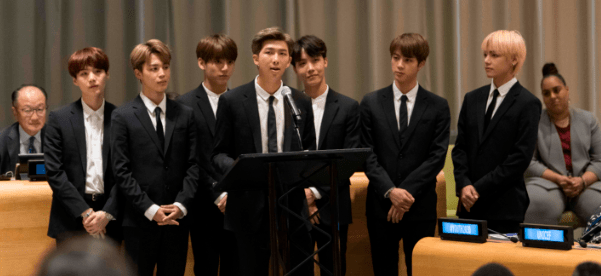
“I think that K-Pop can get unfairly criticized for that perception that K-Pop idols are these empty shells and that nothing they do is authentic. The [protest] songs that you would be singing are coming from figures that are often not taken seriously,” Korean film and culture scholar Michelle Cho said on the “It’s Been A Minute” podcast episode “How Girls Generation Shaped K-pop As We Know It.”
Girls Generation shows no signs of slowing down; asked if she was planning on retiring, Taeyeon replied, “We’re not stopping. A long time ago, we swore we’d love each other in the next life.”
When “Into The New World” was released, Taeyeon and her group members were exactly the age I am, writing this article. We should remember that, across an ocean, our entire life spans ago, nine teenage girls sang a song of hope that has endured throughout the ages, forging a new path and managing to inspire hundreds of thousands of teenage girls around the world today. Perhaps we should take this, and K-pop itself, as a message that, no matter how old we are, we too can make a difference.

 The Maroon