 Posted by
 By Anna Guido. Staff Writer
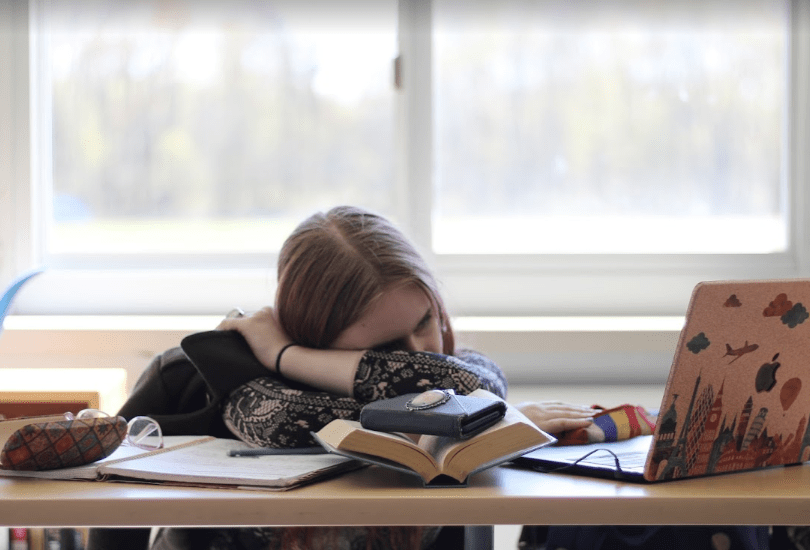
The long and arduous trek to graduation feels, impossibly, slower as the weather warms and the flowers bloom. The whirlwind of applying to colleges has left many seniors disoriented and less motivated than ever in the classroom, and now the task of staying studious in these final months seems nearly insurmountable. Now, more than ever, the term “senioritis” is thrown around in everyday conversation, as if speaking it into existence will make the feeling disappear.
Senioritis– a phenomenon that almost every high school student experiences in their last year– is nothing new. The end goal is in sight, graduation barely a few months away, and nobody can fathom sitting at their desk and toiling away at their schoolwork when there are so many other things that they want to do.
“All of school is forcing you to sacrifice parts of yourselves,” senior Rory Gerber says. “You have to choose between sleeping and being a person and doing your work. At this point in the year, maybe I actually just want to sleep and be a person.”
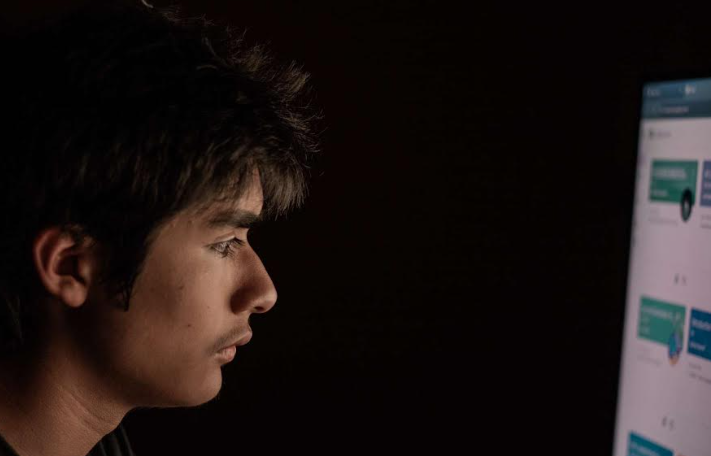
Burnout is something many students experience during their time in school, but it especially targets many people taking copious amounts of AP classes. The workload for many of these advanced classes are increasing with fervor as the May exams loom, and for many students– predominantly seniors– they’re having trouble finding the energy to study in addition to staying on top of their everyday schoolwork. And though college application season has winded down for the most part as commitment deadlines appear, students are feeling the effects of that workload even months later.
“I missed the first early action deadline because I couldn’t focus on anything,” Gray Lobell laments. “I had schoolwork, college; I had another outside of school thing that I’m doing right now… I’m getting my US keelboat certification for instruction. That’s a lot of studying.”
A common saying you hear often is that junior year is the most academically challenging in all of high school. Many students take on a heavy workload in hopes of impressing future colleges and prepare for the SAT or ACT. But in reality, even if 12th grade doesn’t have the same academic rigor as 11th, the sheer amount of different things they have to keep track of and complete outside of school burns people out extremely quickly. Homework assignments, tests, clubs, college applications, portfolios for art students, scholarship opportunities, and if you’re like Gray, outside of school opportunities that require a lot of time and effort.
“It’s so hard to do anything. It feels as if everything is so much that I can’t even pick one thing to do,” Rory comments. “Then I pick one thing but I know I’ll have to do everything else so I can’t bring myself to do… and I’m so tired.”
“I haven’t done any work this whole semester and I kept saying, ‘Oh I’ll get it done by the end of the quarter I’ll be fine!’ and now… I’m no closer to finishing any of my work,” fellow senior Jack Dunphy adds tiredly.
But even though senioritis has pervaded the halls of New Paltz High School for so long, is it a real, proven phenomenon? Vanderbilt University did a study in 2017 that recorded a part of the brain called the anterior insula region had a negative correlation between dopamine and willingness to work. So when one has high dopamine levels, the motivation to work grows, and when these levels drop, the motivation does as well. This is not completely proven to be correlated to “senioritis” but nonetheless it’s a start to understanding it.
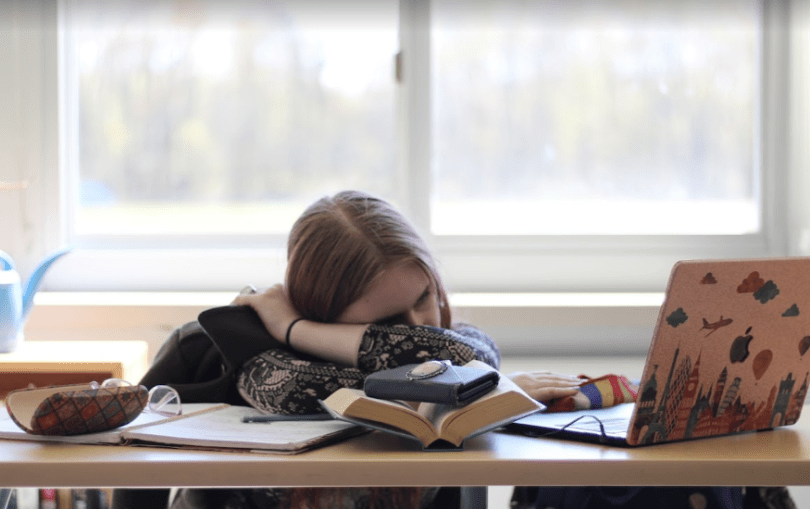
Whether or not this idea is one that scientifically exists, it affects students everywhere, leaving them floundering amongst heaps of assignments without actual tools to help them overcome it.
“I listen to music, I try to be good at getting home and doing my stuff,” Lobell explains when asked if he has any real coping skills to combat his burnout, “But you also just need a break sometimes. You need to not just be on it 24/7.”
“Talking to teachers helps,” Rory replies, “Like asking for an extension. They could say ‘sure,’ but if you just don’t say anything, they’ll think you’re just being lazy.”
Jack, though, is one of the many students who doesn’t have the tools to cope. “I would love to say I have techniques or something, but I don’t have much. I’m definitely not dealing with it well right now… Another thing is, I got into my top 3 schools. Once I got into UBuffalo November 30th, from that point on it was pretty hard to sit down and do work. It felt like unless I fail, they’re not going to rescind my letter.”
This is a mindset that has slowly become popular with students, and are they really wrong? There is a general consensus that there are not a lot of things left to learn in high school, and that too contributes to a declining inclination to do work. Generally, everyone just wants to pass and graduate so they can move onto the next step in their lives. For some, that’s college. Others? A gap year or work. Either way, people are ready to move on.
“I’m cautiously excited,” Gray says about graduating. “I’m excited because, well, we’re going to college! But I don’t want to leave all of this.”
 The Maroon