 Posted by
 By Valentine Morales, Staff Writer
Birth order often dictates the behavior of a person as they grow into adulthood. The role of oldest, middle, and youngest child can determine personality traits, socialization, and in general who someone is. From feeling a large amount of responsibility, to being felt neglected and misunderstood, birth order is a big factor on how people choose to present themselves in the world.
In the Hudson Valley, some schools like New Paltz high school offer courses on sociology to further answer questions about the human mind.
“The family unit is really the most important, it is the primary agent for socialization that we have,” said Ms. Fredricks, the sociology teacher at New Paltz High School. “The oldest sets the tone, there’s pressure and responsibility. You have to be the second mom, while the younger siblings get to observe behavior of other people, and have an example of how to engage in the family.”
“The family unit is really the most important, it is the primary agent for socialization that we have.”
Ms. Fredricks, eldest child
First borns are often held to a higher standard, and Fredricks, an oldest child herself, remarked on how this corroborated some of her experiences growing up. She felt that at times she had to be the second mother, and shoulder the responsibility of having younger siblings.
Ms. Fredericks also commented about how she can often deduce the birth order of some of her students, just by the way they act and present themselves. “The eldest child is usually the type A student, strong, no need for discipline,” she said “while the youngest is more rascally.”
The eldest usually hold a lot of responsibility, with parents often relying on them to act as a second parent or help out with the family. Zoe Penot, a New York native, and the oldest of three, mentions how her day to day is impacted by the tasks she has to perform for her little siblings. “I have to constantly drive my brothers around,” she said as a newly licensed teenager.
Penot also reflected on how she is the only girl and daughter of her father and mother and how she has some more privileges. “I am a lot less insane then them” she said “and my parents are now realizing I am a lot more chill, and I am definitely more trusted,”
While the oldest is usually a perfectionist, achievement driven, and confident, the middle child often gets lost in the shuffle. In the shadows of their older siblings and not the baby of the family, the middle child can experience a phenomenon called “Middle Child Syndrome.” A feeling of being excluded, misunderstood and neglected.
“My parents did have standards, I just didn’t meet them.”
Erin Steinhart, middle child
Many children experience this in different households, as many people deal with family matters and dynamics differently. Erin Steinhart, age 54, and a middle child, had a bittersweet memory of her childhood. She felt often overlooked and unappreciated. “My parents did have standards, I just didn’t meet them” she said when asked about the level of pressure her parents put on her. Her memories of her youth definitely center around the idea of “middle child syndrome” as she recalls the baby of the family got most of the attention and her older brother got attention for his academic achievements.
Other adult middle children recall not liking the role of middle child as an adolescent and wanting to have the role of eldest. Tom Shanley, a middle child and the father of three, remembers tagging along with his older brother and wanting to be the oldest (although now he is happy with his birth order). “Looking back I think I got away with a lot of stuff because I was the middle child.”
His experiences growing up now influence his parenting, Shanley has made a goal to divide up his attention evenly with his three children. Very well aware of the emotions of children when it comes to birth order, Shanley and his wife have taken many steps in dividing chores, household duties, quality time up evenly to make sure each child feels equally valued and loved.
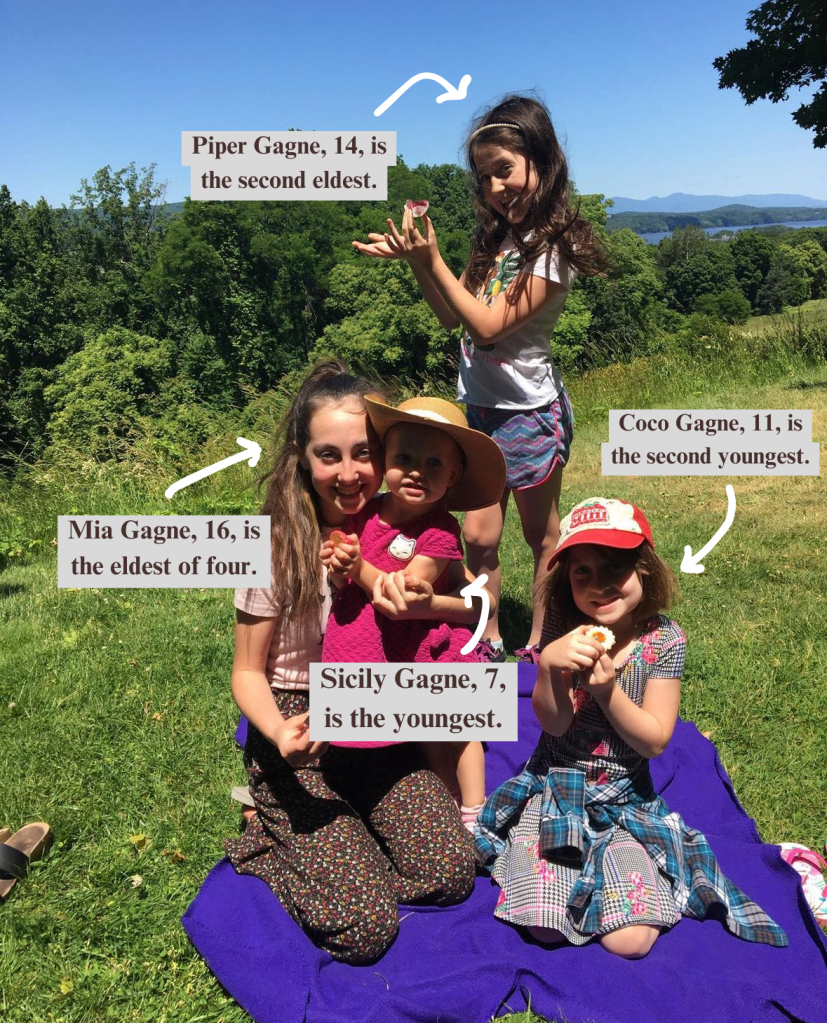
By the time parents have their last child, they have already been through many stages of parenting with the other siblings. This leads to the youngest having completely different childhood experiences from their older or middle sibling. Research from the University of Birmingham, shows that the youngest child has a lower rate of having mental health challenges, emotional and attention problems.
The youngest children can differ in personality, but often inherit some pretty definite traits from being the baby of the family.
This could possibly stem from having more attention from the adults in their life because of being the youngest, and less of a challenge socially because of constant contact with older siblings.
“My parents were significantly more lenient with me,” Joanna Dorman, the youngest child said. “When I was little I received a lot of attention because I was the cute little one.”
Unable to really identify if her childhood was so different from her siblings Joanna does acknowledge the difference in relationship with her parents and siblings.
Birth order has a tremendous impact on someone’s identity, it helps shape a person’s personality while also altering their outlook on the world.
 The Maroon