 Posted by
 By Shelby De Jong, Co-Editor In Chief
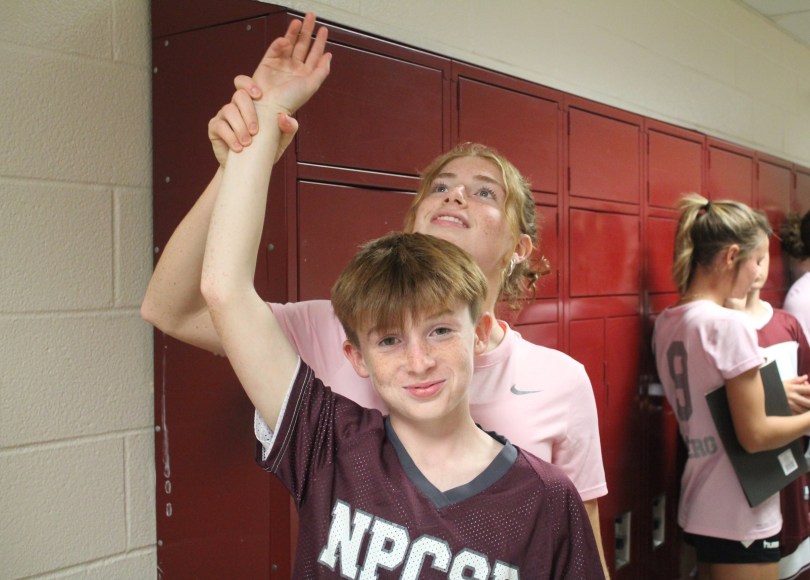
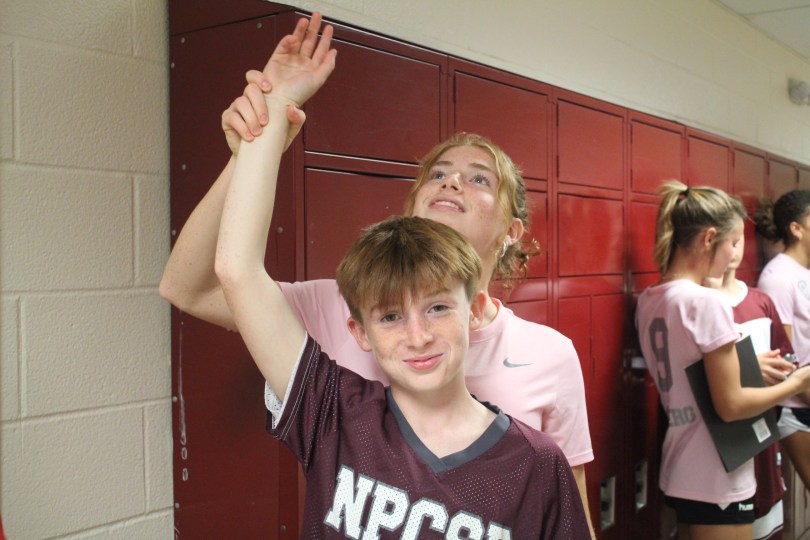
On September 18th, as New Paltz board members filed into the high school audion, they smiled politely and looked around at the students crowding the tight hallway. Clad in their various jerseys, with their parents standing by, 15 student athletes chanted “where’s our trainer?” as Superintendent Grato approached. However, the student chants have not brought about any change as our Superintendent remains rather vague on the issue of the trainer.
“I was very pleased to see students at the school board meeting,” Gratto said in an interview with newspaper staff, “it’s great, we want students to have their say.”
Chants like these had been echoed at the football game the previous Friday, as football players were seeking treatment on Floyd Patterson field.
Despite the protests and the injuries on the field, the Superintendent remains steadfast in his position – a trainer is not legally mandated by New York State, and so it is a position that does not need to be filled as the district continues its attempt to tighten the budget.
This specific cut was especially noticeable to students, since most schools in Ulster County have a trainer. In response to students’ protests, Gratto brought the presence of the Chief Medical Officer, or school physician, to attention.
“We have a doctor that comes to all home football games,” Gratto says.
Although the doctor is present, the lack of Athletic trainer is still stark. The chief medical officer is required to be present for all home football games, as is necessary for every district, regardless of the status of an Athletic Trainer.
“Every school district in New York State is required to have a chief medical officer,” Greg Warren, the Director of Health, Physical Education and Athletics, said. “As far as football games, that’s been in place for years here.”
The role of the athletic trainer is to diagnose and set baselines for concussions and other injuries, as well as treat them and help with recovery from them. Even if the Chief Medical Officer is certified to be capable of these things, it’s not necessarily within their role to do this.
The absence of a trainer is palpable among athletes, coaches, and parents. Athletes have less accessibility to aid on the field, causing coaches or another team’s athletic trainer to take time away from their duties to aid injured students, and during the school day the absence of Brady Ternes, the former Athletic Trainer at NPHS, causes more trips to the doctor and missed classes as students have to travel to get the help they need.
“Sometimes I’m in a game and I get injured and it’s really awful because then our coach has to take focus off of the game and onto the players,” a junior girls soccer player voiced her experience without an athletic trainer said, “A lot of times we have to stop practice for like 30 minutes because someone has a blister…it’s a big disruption to our practice and our games.”
“Sometimes I’m in a game and I get injured and it’s really awful because then our coach has to take focus off of the game and onto the players…”
A Junior Girls Soccer Player
Students and community members continue to insist that Superintendent Gratto and the Board rethink the decision to not replace the role that Ternes previously filled. According to the Superintendent, the choice Ternes made to leave during the 2023-2024 school year felt like an opportunity to aid the Board after a budget deficit was discovered in spring of 2024.
“When the athletic trainer left mid year..[we thought] now we can save $100,000 without making somebody lose their job,” Gratto said.
Although it is possible that the athletic trainer position will be filled, there seems to be no movement towards such actions at the moment, as other issues seem to be at the forefront of Gratto and the Board’s mind.
“My job is to provide the board with all of the information they need and all of the options they have at their disposal to create a balanced budget,” Gratto said, when asked if hearing the protests in conjunction with injuries at the football games changed his opinion. “Difficult choices will need to be made. The board may decide that we can afford to bring back a trainer and they may decide that the money is better spent on other high priority items.”
“The fact that a student got hurt on the football field, I’m very sorry they got hurt, but that’s part of football, and if you play football it might happen.”
Superintendent Gratto
Gratto continued to mention that in the case of football injuries at home games, the school physician would be sufficient to assist players. The measures that NPHS has at the moment regarding athletics, such as safety certified coaches and the presence of the school physician at home football games seem to be the solution for the foreseeable future, even if it does not seem like as much of a solution to athletes on the field.
“The fact that a student got hurt on the football field, I’m very sorry they got hurt, but that’s part of football, and if you play football it might happen,” Gratto says. “In that case, I certainly wasn’t worried about the athletic trainer not being there because the school physician was there.”
Although the protests have shown Gratto, the school board, and the New Paltz community at large that an athletic trainer is something that students, parents, and coaches value, it seems that the situation regarding the athletic trainer is unlikely to change.
“When you’re in the position that I’m in, where you make decisions that everybody is not going to like, there’s people who will not be happy with you,” Gratto said.
 The Maroon