 Posted by
 Written by Shelby De Jong, Co-Editor in Chief
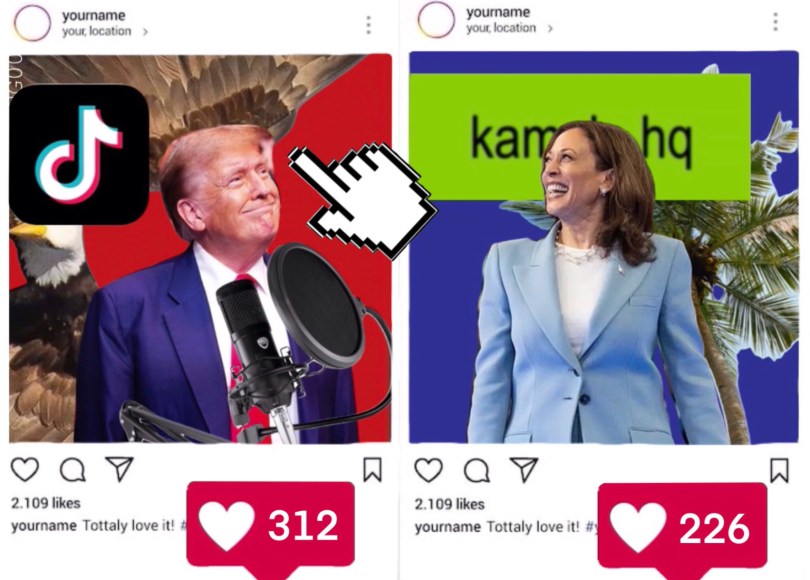
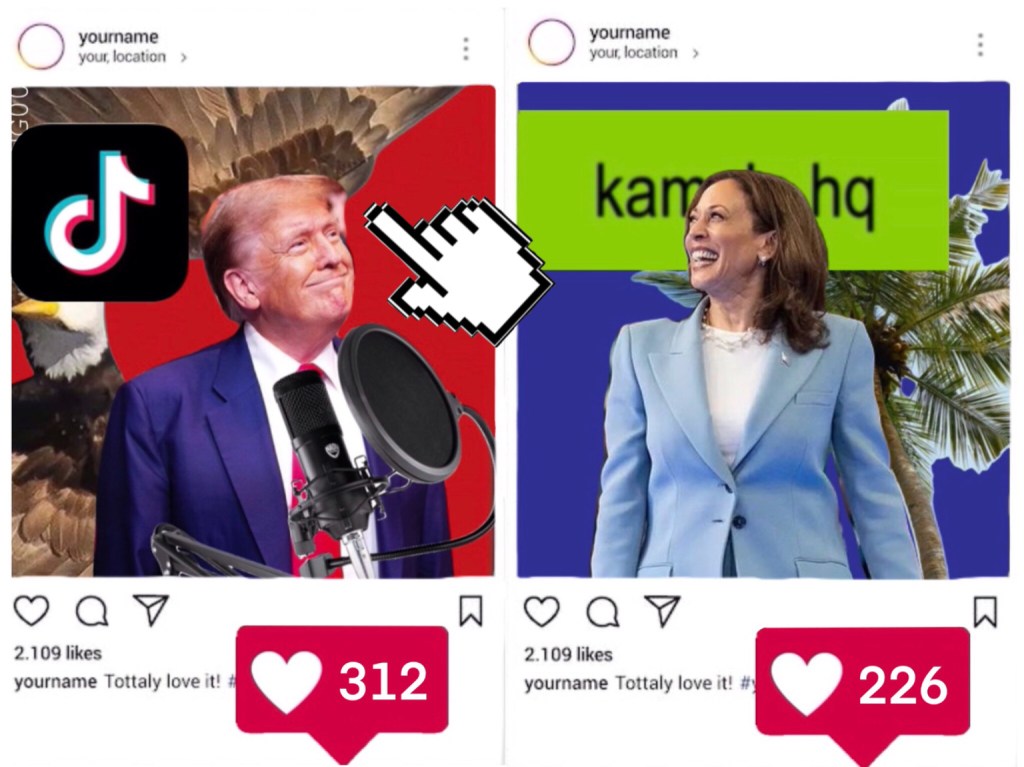
Kamala Harris is brat. Trump is on Joe Rogan. Taylor Swift gets 11 million likes on Instagram endorsing former candidate Harris. What is going on? As politics veer towards something more akin to comedy than policy, so do the campaign strategies utilized by our candidates. The presidential debates this year were lacking substance, and instead more focused on the personalities of the candidates and their flaws.

In almost every class in the weeks surrounding the election, there was a conversation about the debates, the election, and the state of our nation in some way. After a while, I could feel it getting old, the opinions of my classmates held a lot of similarities: political elections had become something of a joke, the debates were frequently unproductive, and party platforms had a growing disconnection from their candidates. What has become a popularity contest based on things way beyond the election is the new normal for the President of the United States, and it devolves further with each election cycle.
As Charli XCX’s hit album “Brat” swept the nation, with its signature font and vibrant green color becoming a popular motif online, Kamala Harris’ campaign team stepped up. Charli posted a tweet, and Harris’ team ran with it – decking out Harris’ twitter headquarters banner with brat related slogans. According to BBC, XCX’s endorsement played a role in Harris being viewed as the “cool girl” candidate. The fact that this sort of vernacular would be used to refer to a presidential candidate is outrageous. On top of Charli XCX endorsing Harris in her own special way on twitter, Taylor Swift endorsed her as well – not only to combat false and deepfaked rumors that she was endorsing Trump, but also to influence her followers.
What has become a popularity contest based on things way beyond the election is the new normal for the President of the United States, and it devolves further with each election cycle.
Taylor Swift is known for having a following composed mainly of teenage girls, but she is supported by many millennials as well – and her post got 11 million likes, so clearly she succeeded in getting a solid portion of her fanbase to rally. Taylor and Charli were two of the endorsements that caught my eye, as well as Harris’ guest appearance on “Call Her Daddy”, a hit podcast by Alex Cooper. This was another attempt to access the “cool girls”, and definitely pandering to a younger audience. Harris wasn’t the first to get on a podcast though, nor was she the only one. Trump went on Joe Rogan’s podcast in late September following in Harris’ footsteps, as well as Theo Von’s. Both of these podcasts are consumed largely by men, as Trump repeatedly tries to increase his male votership. Interestingly enough, Bernie Sanders went on “The Joe Rogan Experience” back in 2020 as well, in a similar presidential ploy, although with a much different perspective. Rogan has made commentary against Trump, denouncing him and saying he would not vote for him, which leads one to believe that these podcast appearances are as much a PR stunt for Rogan as they are for his guests.
Most recently, one could speculate that similar outreach was being made with the TikTok ban fakeout. The message on the banned app mentioned the president, saying, “We are fortunate that President Trump has indicated that he will work with us on a solution to reinstate TikTok once he takes office”, and then mere hours later the message read in part, “As a result of President Trump’s efforts, TikTok is back in the U.S.!”. These name drops of the current president hold more weight than the average user may realize. They could prove influential to a young user who may now associate the return of their favorite app with Trump, remembering that at the polls (whether or not he may be on the docket…) and in their overall view of him, especially when such an individual is too young to understand his policies.
Voting in 2020 was the highest it’s been since 1968…
All of these techniques feel pretty unsurprising to any modern consumer of politics and media, with these sort of celebrity-style attempts to increase political support having been prevalent for at least the last 2 elections, and it’s interesting to see how that’s become the new normal. Candidates have taken on the role of pop culture themselves, and they’re not just dipping their toes in: Harris’ quote was made into a “coconut tree” sensation, Trump has been a sensation in his own special way, and Biden eats ice cream and falls off bikes. As voter registration and voting numbers still only reflect around 60% of the population, perhaps the positive outlook is that no matter how these candidates are getting their votes, at least there is more participation in government. Voting in 2020 was the highest it’s been since 1968 according to The American Presidency Project, and even though the candidates may be questionable, perhaps this involvement will become something more beneficial.
Overall, with the way presidential elections have been going these last cycles, there is a large and reasonable amount of concern surrounding the future of our country. As Trump makes the Tiktok ban a publicity stunt and the word “oligarchy” referring to our nation, things seem to get further and further off track. The increasing prevalence of the role of pop culture in our elections is interesting to watch as someone who just missed voting in an election that anyone can agree was deeply important to the future of our country. Although it feels less striking to me as someone who has now grown up with presidential elections feeling mostly like this, with the laughable-seemingly-dementia-ridden presidential debate of 2020, and now the more composed debate of 2024 still spotted with notes of coconut trees and tesla, it is only natural to wonder – where do we go from here?
Being so within reach of a ballot, so cognizant of the goings on of America and its politicians, and yet unable to cast my vote was a tough thing to grapple with for me and many others in this school, especially when the rights of myself and others are the ones at stake: women’s rights, healthcare, LGBTQ rights, immigration laws, student financial aid – the policies at hand affect parts of anyone’s lives, and it is common to feel helpless. But, in the words of my elementary school teacher, “the world will keep turning and the sun will still rise every day”. That is what she told my fourth grade class on the day after the 2016 election, as she tried to address a topic that a group of children sitting on the floor for circle time did not understand. Now, as I understand what is really at hand, those words feel just as vital.
As idiotic as it may feel to have the voices of actors, singers, and podcasters be at the forefront of our country, at least those voices are there, and least some sort of outreach and call to action is being made. Maybe the words of Taylor Swift are what this country needs, and if that is what it takes then so be it.
 The Maroon