 Posted by
 By Jiho Son, Co-Editor in Chief
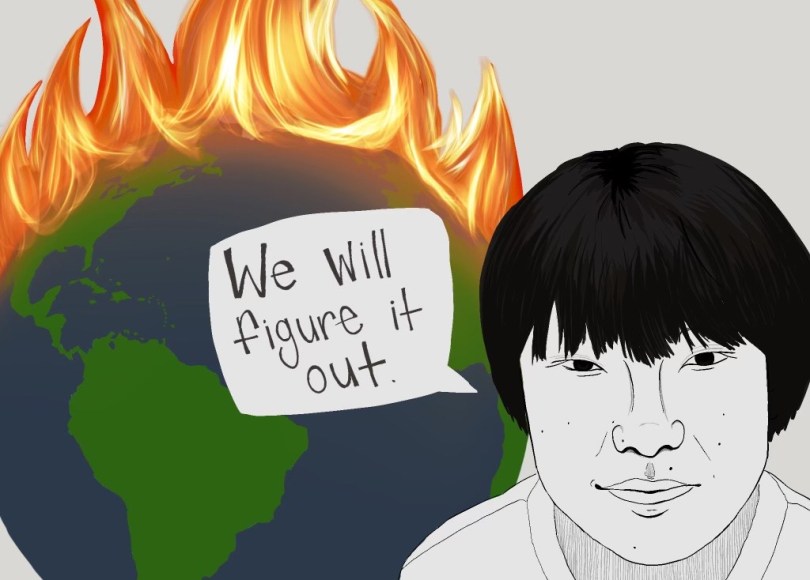
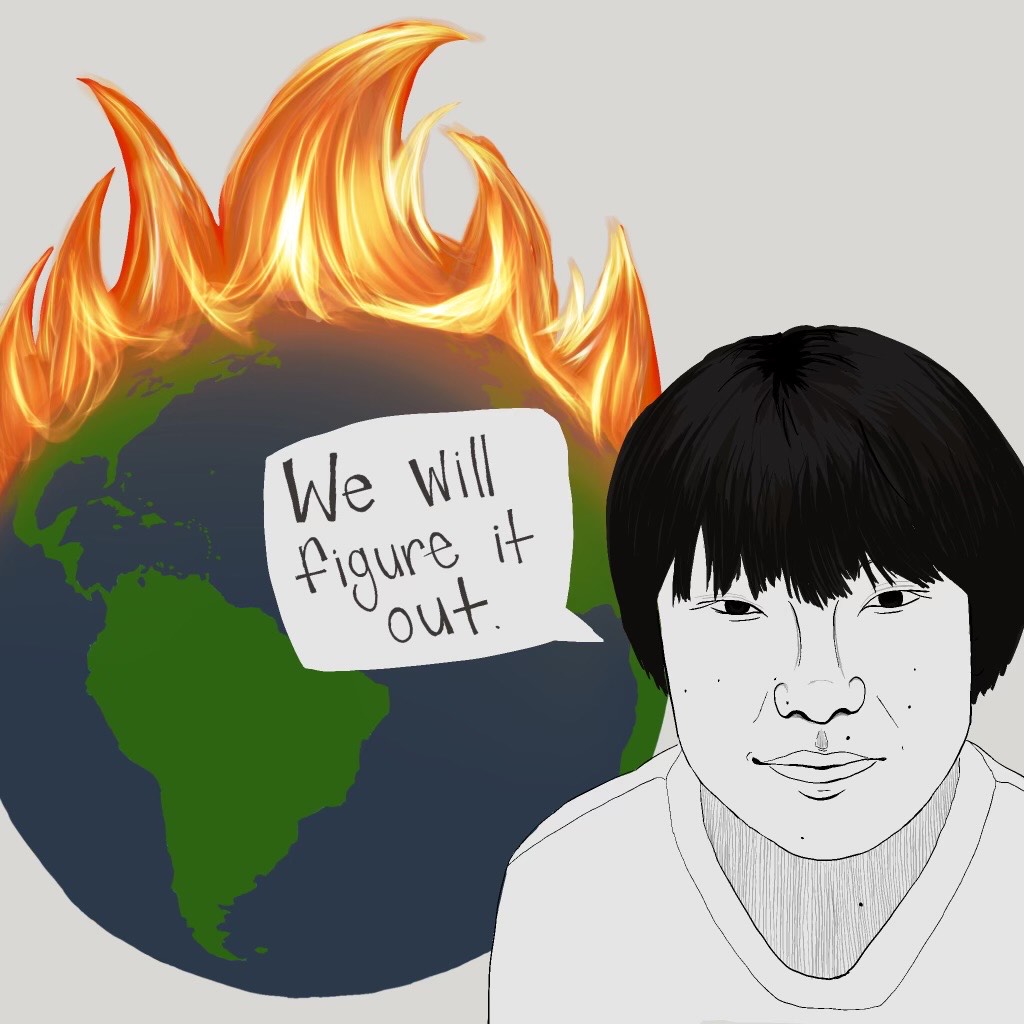
The future is uncertain. Climate change is gradually degrading our environment. Poverty, inequality, and hunger are widespread. The threats of economic instability and nuclear weapons loom over our lives. Mental health issues and technology addiction are at an all time high. Maybe artificial intelligence will replace humans and take over the world. I have to apply to college. There are plenty of options when choosing what existential crises we want to think about. It is easy to feel like the world is ending. Despite all of this, I have faith in the future of humanity.
The best we can do is reflect on the past and try not to make the same mistakes twice.
It is impossible to accurately predict the future. The best we can do is reflect on the past and try not to make the same mistakes twice.
32 states passed eugenics laws by 1932. The movement combined a misled application of Darwin’s theory of evolution to sociology and economics with racist ideologies to forcibly sterilize 70,000 American citizens. Minority groups were targeted as having “undesirable traits”. The entire movement was highly discriminatory and scientifically unsound. Today all the eugenics laws in the United States have been repealed, with eight states issuing formal apologies and reparations.
There were 26 million women in the United States who were not allowed to vote during the 1916 election. After WWI, America acknowledged that fighting for democracy abroad while not allowing women to vote in our own country was hypocritical. In 1919, the 19th amendment was passed, granting suffrage to women in the United States.
Artificial trans fats caused 50,000 deaths in 2006 according to the National Institute of Health. Though they increased the shelf life of many foods, trans fats were causing one in five heart attacks up until their ban in 2018. They are now banned in about 60 countries, including the United States of America.
This is all to say that, as a society, we are always striving toward some higher ideal. This struggle is reflected in how we progress technologically, culturally, and socially. There are countless other examples of this. Problems exist. Sometimes we create those problems. Sometimes these problems are horrible and wrong. But somehow we always manage to recognize our mistakes, move forward, and improve ourselves as humans in some way. When we look at history and zoom out, it is easier to see how far humanity has come. The world is far from perfect, but I believe that at least most of us try to make it a better place.
So should we fear the future? I think we should. Even though I believe we will survive in the end, I also believe fears about the future are valid. In fact, they are extremely important if we want to keep ourselves on the right track. We should not disregard all caution and stop caring about our future. A healthy fear of the future and criticism of the present is essential in making sure we continue to progress in a positive way. It is our fear of a terrible future that ensures this future will not come to pass.
Our world has and always will continue to evolve. There will inevitably be some new evolutions that will cause people harm. There is no escaping this fact. We should not be indifferent to the over 60,000 Americans who were forcibly sterilized starting in 1907, the millions of disenfranchised women throughout history, or the 500,000 people who still die each year from harmful trans fat. Just as the advancement of technology and ideas is inevitable, the harm that comes from them is inevitable too. We should not downplay the suffering that harmful technologies and ideas cause. But these are wrongs we have addressed or are at least working on resolving. There is some aspect of the human spirit that causes us to strive to better ourselves, however annoying or tiring it might be.
Because harm is inevitable, we must make progress inevitable too. When we recognize something is not right, we must try to make it right. In fact, I believe we will make it right. It is in our nature to progress in this way: making mistakes and learning from them.The recognition that a mistake has been made is the most important part. It is the first step in the process for positive change. It is because we recognized trans fats were causing heart disease that we banned them. It is because we recognized eugenics laws were discriminatory and pseudoscientific that we repealed them. It is because we recognized limiting women’s suffrage was unfair and hypocritical that the 19th amendment was passed. I believe that as long as we are able to continue to identify these issues, humanity will not only survive, but continue to progress.
Today, there are still plenty of fears about the future to go around.
Today, there are still plenty of fears about the future to go around. The threat of mass deportation has become a reality for the 11 million undocumented immigrants living in the United States. The reproductive rights and autonomy of women is being challenged further with total abortion bans in 12 states. Scientists are warning us that in only 10 years time, the catastrophic effects of climate change could become irreversible.
As we attempt to reconcile ourselves with the present, again it is important to remind ourselves what has happened in the past. It is my belief that, just as we recognized the pseudo scientific, discriminatory nature of eugenics, the anti-immigration ideology of replacement theory will become an unforgivable past rather than a terrible reality. Just as women’s right to vote is undisputable, the right to reproductive autonomy will become similarly irrevocable. And just as the harmful effects of trans fats have been recognized and mostly dealt with, the use of fossil fuels will become an artifact of the past, the climate crisis reined under control.
As I have said, recognition of an issue is the most essential step in collectively fixing our world. We should realize that while these issues are certainly existentially pressing, at the very least we have acknowledged their existence. It is because we have already begun this process of progress that I maintain my hopeful, though admittedly not overly optimistic, view of what the future holds.
Humanity is constantly on a roller coaster of self-actualization. The path to realizing an aesthetic ideal of society is evidently not a straightforward one. It is in our nature to make mistakes, but even, or perhaps most importantly, from our most grievous errors, we must take lessons. We must not let history repeat itself. This call to action is a hopeful one. Though, at times, it may feel like the world is collapsing around us, we will not let it. Though we cannot truly know what the consequences of our actions will be, we will try to make a positive impact. And I believe that when we look back a century or two from now, humanity will be grateful for the changes we made and the crises we averted.
As Soren Kierkegaard once wrote,
“Life can only be understood backwards, but it must be lived forwards.”
 The Maroon