 Posted by
 Written By Co-Editor in Chief, Maeve Eisenhandler
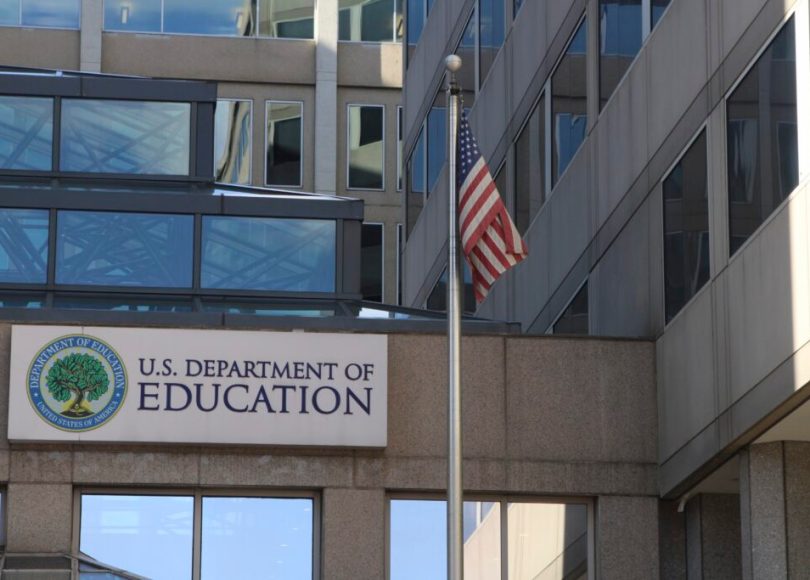
In March of this year, President Trump signed an executive order to close the federal Department of Education. The two main reasons: The U.S. Constitution does not include any jargon relating to education; and the high tax related costs. It’s important to note that this issue is nothing new, in fact, it has been a topic of political debate basically since the department’s implementation.
An examination of the education system in the U.S. will show that four reforms have been made to it nationally since the nation declared its independence. To understand the current state of the education system, we must look towards the past. These reforms include the Common School Movement, the Progressive Reform Era, the Equity Movement, and the Standards-Based Reform movement.
- The Common School Movement (1830-1860)
This movement coincided with the Universal Education movement, and sought to standardize the education system within the United States. Before this era, dating back to colonial time, schools were designed for upper class white men. The schedules of the school year revolved around the agricultural seasons because many teachers were also farmers, and teaching provided supplementary income in the off seasons. The shift towards teaching as a female dominated profession was also around the 1840’s because it fit gender roles to have a mother figure to teach morals and manners to students. It was also recognized that teaching fit more squarely into the gender roles defined for women. The teachers were generally young, which became a precedent for young women that were looking to earn income and stay occupied between their teen years, while becoming a wife and a mother. It was also during this era that the first Department of Education (1867) was signed into legislation by President Andrew Johnson. It was intended to collect data about the nation’s schools, but there were concerns that it would wield too much power, and so it was demoted to the Office of Education. While the reform looked different from region to region, it was still successful in aiding national educational development. Towards the late 1800’s most children in the north were attending schooling, and the south was slightly staggered behind that.
- The Progressive Reform Era (1880-1930)
This era led with the intent to have all students learn a set curriculum; english, math, science, and social studies. This came with the intention that children would have time to develop their interests before they had to settle on a career pathway. There was a concentration for a humanistic approach to education, but after a trial period, there was an overwhelming sense that students weren’t being held to the appropriate standard. It is generally considered that this movement wasn’t very successful, but it paved the way for the Equity Movement because of its liberal framework.
- The Equity Movement (1950’s-70’s)
The implementation of this movement was thrust forward because of the monumental Supreme Court decision of Brown vs. Board of Education. The ruling declared that the segregation of schools was inherently discriminatory. This worked in conjunction with the Civil Right Act which entitled the government to withhold federal funding to schools that were unwilling to comply with desegregation. Critics of this movement argued that there were inherent differences between white children and black children’s learning abilities. Again movements for more humanistic policy wins, and we see changes like less teacher authority to discipline, more electives, and fewer curriculum requirements. This, however, did not satisfy everyone, as not even a decade later, another reform movement emerged.
- The Standards-Based Reform Movement (1983-2002)
This movement came about in 1983 when President Regan created a National Commission on Excellence in Education, which then produced ‘A Nation at Risk.’ This report detailed how the current system within education was failing students, and there needed to be a return to the core subjects with a concentration on standardized testing. This was supposedly reintroduced to make sure that all students are receiving the same education as the rest of their peers. Furthermore, it was in 1980 when the modern Department of Education came to be, brought forth by President Jimmy Carter, who had a significant portion of his campaign backed by teachers unions. Taking into account that this is a time where there was a large emphasis on economics due to the rise of Young Urban Professionals (YUPPIES). Therefore the introduction of boards of education, and implementation of business models to have education systems function akin to a corporate company. President George W. Bush also signed an act called “No Child Left Behind” (2002) which required that all schools use standardized tests to keep students on the same track academically.
Considering the reform movements that we have seen, the education system as we know it today relies on the Department of Education. From the 2021-2022 school year, it is estimated that NYS public schools received on average 7.3% of their funding from federal sources. Additionally, many schools create their curriculum with help of the Dept. of Ed’s guidance. Despite this, it is important to note that the Dept. of Ed does not have any control over curriculum requirements, requirements for enrollment/education, or selection of sources and materials used for lessons.
In a press conference with President Trump’s press secretary, Karoline Leavitt, she clarified that it wouldn’t be an entire shut down, but it would be reduced to perform “critical functions.” What the Trump administration is defining as “critical” has yet to be seen, but schools are already struggling with funding cuts. Specifically, schools that receive Title 1 (directed towards schools with large numbers of low-income students, and students with disabilities) will likely see a severe cut in that funding which is technically protected under federal law, but could be passed off to the states. Unfortunately because this was an executive order, it will be extremely difficult to reverse. However for a total shutdown of the Dept. of Ed, Congress would have to make a ruling to fully close it.
Throughout all of the confusion, to ultimately avoid as many of the effects as possible, it will be a collaborative effort to ensure that students in NYS are all receiving an adequate education, requiring a significant amount of leg work from tax payers to make up for the loss of funding.
 The Maroon