
 Posted by
 By Staff Writer, Calvin Maher
Luigi Mangione is the name of the man who allegedly shot and killed Brian Thompson, who at the time was the CEO of UnitedHealthCare, an American Health Insurance company. He was arrested in Altoona, Pennsylvania on December 9th, 2024, and is indicted with several state and federal charges, namely murder in furtherance of terrorism. He pleaded not guilty to the federal murder and stalking charges. Mangione is the prime suspect in the case of Thompson’s murder, but in the past several months, he has become synonymous with much more, with countless people vilifying him and equally many singing his praises. Through the fog of anger, fear, and political frustration, I find myself wondering, how did this man become such a symbol?
“Included in the list of medicare insurers who are accused of overbilling their clients”
Thompson’s death was met with mixed reactions, ranging from condemnations by politicians and celebrations on X (formerly Twitter) akin to the Munchkins in The Wizard of Oz. Furthermore, wildly different opinions about Mangione were being thrown left and right, with some
internet users calling him “a hero”and graffiti saying he “did nothing wrong,” while others (such as my grandma) are calling him “a maniac.” The celebration got me curious. Why would so many people be so happy about a man’s murder?
A chief reason is the public disdain for Thompson’s insurance company, United HealthCare. The company has found itself in hot water with a number of controversies and lawsuits. In 2022, they were named by the New York Times in a list of medicare insurers accused of overbilling their clients. In 2019, Judge Rober N. Scola Jr. called the company’s denial of treatment “immoral and barbaric.” So, between all the denial of coverage and enormous overcharging of those who received it, most people weren’t fans, to put it mildly. And Brian Thompson, as the CEO of this multi-billion dollar corporation, acts as the face of it all.

Mangione, on the other hand, is in a way more relatable to the average American, having lived a fairly mild-mannered life until his implication in the case. He was born in Maryland in 1998, was the valedictorian of his high-school class, and spent his free time reading and doing yoga. So to hear that someone like him allegedly killed a CEO with a homemade gun on a Manhattan sidewalk understandably strikes a chord with many Americans. Many find it an enthralling exercise of power over someone so elite that they see as untouchable. And understandably, people are obsessed.
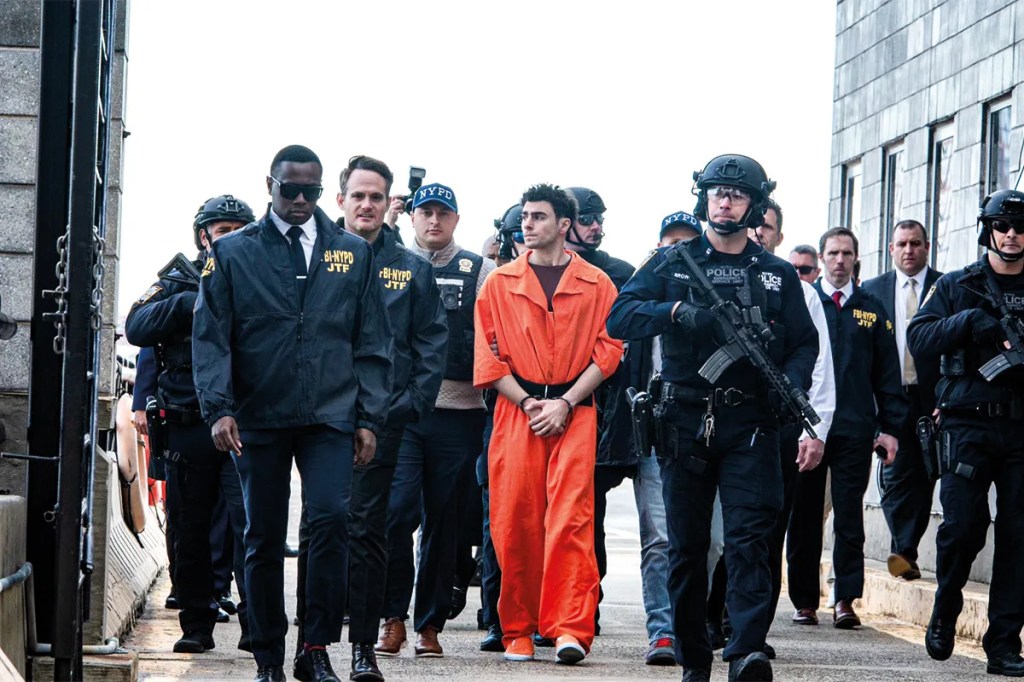
I think this obsession has its roots in the uniquely American image of an outlaw, the type you see in old western movies. A gun-slinging rebel who, to put it crassly, cuts through the bullcrap. It was an essential part of the countercultural movement of the mid-twentieth century, and became synonymous with a disregard for “the man,” as it were. This archetype became popular enough to cement itself in the American mythos, and seems to be making a resurgence in the modern day. The lack of faith that Americans have in institutions like companies, banks, political parties, etc. have boiled up to a level of frustration that rages for change. Since 1992, favorable perception of the Republican party has fallen by 9% and the Democratic party by 12%, according to a 2024 study by Gallup.
“Luigi freed us!”
When he spoke here in New Paltz, Antonio Delgado, Lieutenant Governor of New York State, named this decline in party legitimacy as a reason for the rise of Donald Trump, who embodies the outlaw archetype for many people, in his rejection of the expectations of other officials. Trump ran in the position of an outsider in Washington, a business-minded, larger than life personality that aimed to whip the country into shape, so to speak, through unconventional policies, like the dissolution of government agencies. He has what Delgado describes as an “uninhibitedness” in his approach to politics, which is a big part of what makes him popular among his supporters. This modernized version of a classic American idea of subverting the powers that be, and it seems like no matter where people stand politically, most seem to feel that some level of subversion is needed.
Many people delight in seeing the shaking of standing institutions and the departure from legality. Videos are circulating of voters cheering in response to the question “who’s excited to vote for a convicted felon?” Likewise, protesters hold up signs saying “Luigi freed us!” You can buy t-shirts showcasing both Trump and Mangione’s mugshots.

At this point, it seems that most people are less interested in whether or not Mangione actually did it, and the purpose of the verdict seems more like a statement about the modern power struggle. I’m reminded of the trial of O.J. Simpson back in the nineties. As defense attorney Johnnie Cochran put it, in his closing argument “your verdict in this case will go far beyond the walls of Department 103 because your verdict talks about justice in America.” What was once a trial of an individual expanded to a nationwide debate about the state of systemic racism in our country. This publicity ended up shedding light on police misconduct and significantly furthered the discussion of it across the U.S.
I suspect the same will be true of the Mangione case. The majority of discourse I have seen has been assuming that he did it, but eyebrows are being raised about the ethics of his arrest. Magione claims that the Altoona police failed to read him his Miranda rights. New York City Mayor Eric Adams told reporters that Mangione “carried out this terrorist act in my city” without specifying the actions as alleged, and the Department of Justice directed prosecutors to seek the death penalty for him, while a Texas gunman who killed 23 people in a Walmart is being offered a plea deal to avoid a lethal injection.
However you feel about Mangione, it’s hard to ignore the moral dubiousness we’re observing in this case. It makes you wonder about the priorities of authorities when the killing of a CEO is treated so much more harshly than that of 23 people. Protesters are calling this a way to shut down dissent.
In a way, it feels that part of what’s on trial is the unrest that Mangione represents. If he is found innocent, then others could follow in his footsteps, taking up the outlaw persona and taking justice into their own hands. On the other hand, if he’s found guilty, it could set a precedent of swift action being taken against those showing dissent towards the elite. Both, admittedly, are very speculative possibilities, but I’m finding myself concerned at the idea of either. The future of the trial is uncertain, but as Johnnie Cochran put it–the verdict of this case will reach far outside the walls of its courtroom.
Sources
- https://www.newsweek.com/eric-adams-luigi-mangione-look-eye-2004038
- https://abcnews.go.com/US/pennsylvania-authorities-deny-bungling-evidence-luigi-mangione-arrest/story?id=121255877
- https://www.nbcnews.com/news/us-news/luigi-mangione-pleads-not-guilty-federal-murder-stalking-charges-rcna202974
- https://www.npr.org/2025/03/26/g-s1-55939/gunman-texas-walmart-attack-death-penalty-plea-deal
- http://law2.umkc.edu/faculty/projects/ftrials/simpson/cochranclose.html
- https://youtu.be/OSvuWi6G4I8?si=A5BLBt2_9CDgA9kh
 The Maroon