 Posted by
 By Willa Ashton
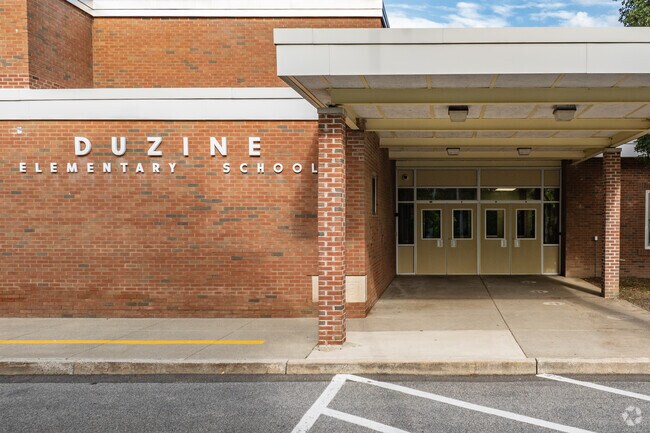
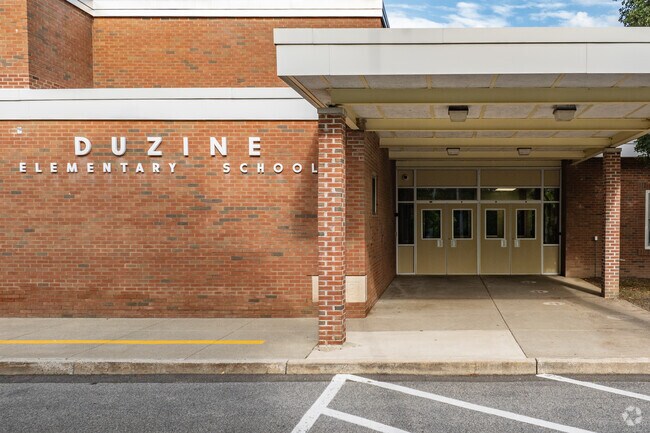
At the most recent school board meeting, the New Paltz Central School District Board of Education voted to consolidate the district by closing Duzine Elementary School. The board emphasized that while the decision to close the facility has been made, major questions regarding the implementation of said plans remain unresolved. The earliest possible closure date would be September 2027, and decisions about how grades will be distributed across the remaining three buildings – as well as the future location of the District Office – are still under deliberation.
The board plans to continue its discussions at the December 17 meeting, where they may pass a formal resolution outlining their intended grade configuration and consolidation plan. Once those decisions are finalized, the district will establish advisory groups made up of faculty, staff, parents, and students to guide the transition and ensure that the consolidation is carried out thoughtfully and effectively.
With that decision now set, the debates and concerns that have unfolded over the past months take on new weight. What follows is the reporting that led up to this moment.
On the evening of November 5th, the New Paltz Central School District Board of Education convened in the high school’s audion to address a growing concern: the future of Duzine Elementary School. With ten officials seated in a semi-circle—seven board members, Superintendent Stephen Gratto, and two student representatives—the meeting drew a modest crowd of about twenty spectators. But the question on everyone’s mind was anything but small: Is Duzine on the chopping block?
The meeting opened with student updates on Halloween festivities, sports, and the PIGLETS program. However, a request from a student representative regarding personal device use in art classes was met with visible discomfort from the board, hinting at a broader reluctance to accommodate change.
“You need to make reductions at the right speed, so that the programs aren’t affected” – Gratto
Next, financial consultant Jeffrey C. Shaver of O’Connor Davies Accountants and Advisors presented the district’s audit findings. Shaver confirmed that the district’s debt had dropped from $47 million to approximately $33 million as of June 30, 2025. While the audit faced no complications, the numbers painted a sobering picture of the district’s current financial health.
Superintendent Gratto then took the stage with his presentation titled “NPCSD Consolidation Proposal.” Before diving into the details, it’s important to understand the logistical challenges facing the district.
According to the NPCSD Consolidation Study, researched by Dr. Chuck Khoury and board administrators, enrollment has plummeted since 2008. Today, the district serves 1,689 students, with Duzine accounting for roughly 20% of that population. Projections show that Duzine’s kindergarten class will shrink 17% by 2030, leaving just 62 students in fifth grade that year. With this enrollment crisis in mind, Gratto consistently emphasized the need to “right size” the district: adjusting staffing, facilities, and resources to match the shrinking student body.
“You need to make reductions at the right speed, so that the programs aren’t affected,” he warned the board. “You are heading towards the point where you are going to need to make reductions for the sake of making reductions.”
Gratto stressed that the issue is less about wanting to change buildings and more about survival.
“We have trouble financing this district, just like every other school in New York State,” he said. “Expenses keep going up, and we can only increase our taxes by about 2% each year.”
He explained that consolidation, while difficult, may be one of the few tools available to protect what matters most.
“Saving money through consolidation gives us the ability to preserve positions—mostly teaching positions—and preserve programs,” he said.
He then presented five consolidation proposals, four of which had been previously discussed. The fifth was a surprise addition.
“Keeping Duzine ready gives us options if enrollment increases”-Gratto
Proposal 1 would move kindergarten through second grade to Lenape, shifting fifth grade to the middle school, leasing Duzine to an outside organization, and relocating the district office to the high school. The district would save roughly $1 million annually, but moving the district office would cost an unexpected $2.5 million.
“I am going to be honest—I did not expect this number,” Gratto said. “It is important to consider if moving the district office is worth it.”
Proposal 2 would keep Pre-K and kindergarten in Duzine, move grades one and two to Lenape (with fifth grade staying in Lenape), move the district office to the high school, and lease unused parts of Duzine. This option would save about $240,000 annually.
Proposal 3 would house Pre-K in the middle school, put kindergarten through fifth grade in Lenape, move the district office to the high school, and fully lease Duzine. Financial outcomes would mirror Proposal 1.
Proposal 4, the only plan that avoids consolidation entirely, suggests renting unused space in all four buildings. It would generate far less revenue but would be the least disruptive to students and staff.
And finally, proposal 5, would close Duzine entirely. The district office would remain in Lenape, and the district would be reorganized into three schools: Primary (K–2 in Lenape), Intermediate (3–6 in the middle school), and a combined 7–12 high school.
Gratto acknowledged the upheaval that would come with any major reorganization but argued that the district must be prepared for multiple futures—especially ones where enrollment does not rise again.
“Keeping Duzine ready gives us options if enrollment increases,” he said. “You’d see that increase at the elementary level first, which gives the district several years to plan.”
Gratto’s proposals reflect a difficult balancing act: preserving educational quality while responding to financial and demographic realities. Something needs to change for the health of the district’s future, but will it be at the expense of the students and teachers that make up the foundations of the New Paltz School District?
Proposals One and Three offer social benefits such as eliminating the second-grade transition, reducing teacher travel between buildings, and creating mentoring opportunities for older students. However, Lenape’s library may not be able to accommodate younger elementary books, some classrooms would be smaller, and nearly all high school teachers would need to share rooms due to the office relocation. Proposal Five eliminates the cost of moving the district office but introduces concerns about developmental appropriateness, safety, and school culture by placing grades seven through twelve in the same building.
To understand teacher perspectives, I interviewed Matthew Elkin, a Duzine teacher and frequent attendee of board meetings. He expressed deep concern about both the process and the impact of consolidation.
“Consolidation would increase overcrowding, reduce instructional flexibility, and place heavier demands on shared spaces and schedules,” he explained.
“Teachers already struggle to find time for collaboration within their own grade levels. Bringing every elementary grade into one building will not create more opportunities for collaboration — it will amplify the challenges that already limit this work.”
Elkin also criticized the lack of transparency in the process.
“The proposal process has not been conducted thoroughly enough to support a decision of this magnitude,” he said. “Many important questions about cost, space, student experience, and long-term impact remain unanswered.”
Most importantly, he worries about what closing Duzine would mean for the district’s youngest learners.
“Duzine is often referred to as the ‘Heart of New Paltz,’” he said. “Closing it would dismantle a well-functioning environment designed for young learners and replace it with crowded spaces and fragmented programming.”
As Elkin’s concerns reflect, many teachers feel that consolidation risks undermining core educational values. That sentiment was echoed repeatedly during the public comment session that followed, where community members highlighted what they believe is at stake.
During public comment, English teacher Eileen Kamrass spoke first. She criticized the focus on financial and logistical considerations over student wellbeing.
“I heard a lot about right sizing, dollars, schedules, and heard nothing about students,” she said. Drawing from her teaching of Romeo and Juliet, she added, “Shakespeare tells the truth. It’s the adults that let the kids down.” She urged the board not to rush into a decision that could harm students.
“Loss would be catastrophic for these teens. In the end, it’s the students that will pay the price.”
Her comments were met with applause.
High school math teacher Kathryn Stewart then addressed the board, pointing to space limitations in the high school and the uncertainty surrounding upcoming state graduation pathway changes.
“Empty rooms are never empty,” she said. “Students seek out teachers, because that’s the kind of place we are.”
She cautioned the board against making irreversible decisions amid so many unknowns.
“Let’s wait and see what it looks like. No haste needed– let’s take time to see what’s happening.”
Senior Maxwell Strauchler proceeded to highlight his concerns about safety and cost if younger grades were moved to Lenape.
“If you have K–3 at Lenape, you could not keep the same playground,” he said. “I would not trust kindergarteners playing on that playground. That transition will cost money.”
He also questioned how the district would handle demographic changes.
“What happens when there is a sudden population influx? “What we have now works,” Strauchler said.
The board will continue reviewing data, listening to stakeholders, and weighing financial realities. But one thing is clear: the decision surrounding Duzine’s future will leave a lasting mark on the New Paltz community. As the district decides how to consolidate, reconfigure, or maintain the status quo– families, teachers and residents are left to grapple with the same pressing question, “What is the future of our district?”
With the board’s vote to close Duzine now official, that question becomes even more urgent. The coming months will determine not whether Duzine closes, but how the district manages the transition– which grades move where, when the closure takes effect, and how students, teachers, and families will be supported throughout the process. As advisory groups form and planning begins, the community must now shift from debating the possibility of consolidation to preparing for its reality.
 The Maroon