 Posted by
 By Lila Ackerman
If you live anywhere near New Paltz, you’ve probably heard about the new New Paltz Way Hotel near Water Street that’s replacing the abandoned drum factory. While currently in construction, this hotel is planned to open Summer 2026, and is already available for bookings. It offers a comprehensive experience– salt room and mineral pool, heated floors, balconies overlooking the Shawangunk Ridge. However, there has been recent concern regarding the hotel and its place in our community.
This is a small town with challenges to parking and weekend traffic.
Ela Jaynes
Regardless of the procedural details surrounding the new hotel, and the specific concerns or praises residents have shared, the discussion around this development reflects a broader question: what kind of community do people want to live in? When asked directly, residents shared a few common desires: people wanted to feel welcome and safe, to engage with both local businesses and the natural environment, and to balance progress with preservation.
Melanie Cronin, the owner of Ryan Cronin’s Art Gallery on Water Street, added, “Building community has been a cornerstone of our business model. We spend a great deal of time organizing community events where everyone feels welcome, where fun is encouraged, and connections are fostered.”
New Paltz High School juniors Anya Weinstein and Stella Ettinger emphasized the importance of places with diverse cultures and perspectives, as well as access to opportunities for recreation and enjoyment. The New Paltz Way founders responded by stating, “We love New Paltz. We love the Gunks. We’re excited to be able to build our hotel here and be part of your community.”
As stated on its website, this hotel is part of a hotel company that “creates settings and scenarios that connect us to what matters most.” Another small hotel operated by the same owners in Woodstock similarly “welcomes travelers to stays that are entirely in harmony with their surroundings.” Their designs reflect their attempt to house people near both walkable communities and natural, grounding environments. According to Kim Hoover, “The Water Street façade is more formal in expression, featuring smaller windows and siding styles consistent with the Gateway District and surrounding downtown architecture.
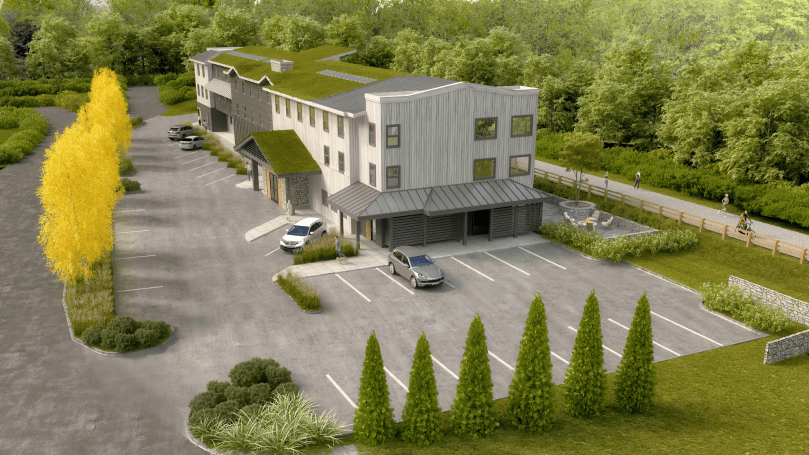
In contrast, the west side of the building, which abuts the rail trail, takes on a more organic character, reinforcing the hotel’s relationship to nature and the outdoors.” While this demonstrates the time and thought invested into the hotel’s design, some residents are still wary of the prominent presence it may take up.
“I am excited, but admittedly somewhat protective of what I love and know, and the idea that the magical entry to instant nature on the rail trail will feel really different with looming windows and cafe seating,” stated Ela Jaynes, a New Paltz resident.
Ela Jaynes also explained that she wanted “to live in a community that considers future planning paramount, and holds a strong enough identity to be able to extend gracious hospitality to outsiders.”
This emphasis on thoughtful development aligns with the Ulster County Industrial Development Agency’s mission to “advance the job opportunities, general prosperity and long-term economic vitality of Ulster County residents.” When asked how the new hotel fits within their mission, the agency stated it would “create well-paying hospitality jobs and short-term construction jobs that stimulate and support the local economy,” as well as enhance sales tax revenue through increased tourism– which contributed to their decision to approve the development.
Small businesses surrounding the hotel, primarily in Water Street Market, have also expressed positive views regarding the economic impact of the new hotel. “The founders of the [New Paltz Way] hotel went out of their way to connect with the Water Street Market community and have been very supportive. Owning a small business is not for the faint of heart. Locals don’t always shop local. Visitors do,” said Melanie Cronin.
Additionally, Kim Hoover emphasized that the hotel would not only increase tourism overall, but specifically attract overnight guests to the area. She offered this scenario: “A couple might discover a piece of artwork in a local gallery but hesitate to purchase it immediately. If they are staying overnight, they have the opportunity to return the next day and make that purchase. Extended stays encourage deeper engagement with local businesses.”
Reduce long-term energy costs
Kim Hoover
One of the biggest community concerns regarding the new hotel was the possibility of increased traffic congestion. New Paltz already lacks sufficient parking, so a large infrastructure that invites more tourists could create conflict. New Paltz resident Ela Jaynes expressed that “change is not easy. And this is a small town with challenges to parking and weekend traffic.”
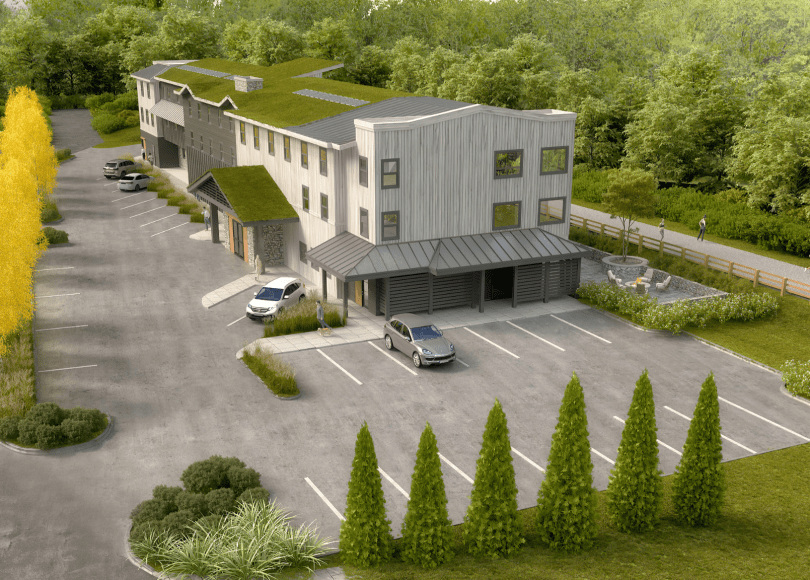
When asked about this concern, Kim Hoover explained that “comprehensive traffic studies were conducted at multiple times throughout the year to evaluate potential impacts. The site provides sufficient parking for guests and staff, even though hotels rarely operate at full capacity year-round.” After reviewing the architects’ renderings, they included front and side parking lots to address this need.
Green roofs were also a prominent observation in many of the other renderings provided by Hoover Architecture, reflecting that sustainability was a key consideration when designing the hotel. “The building will feature a living roof designed to attract pollinators and contribute to stormwater management. Solar panels integrated into the roof will help offset electricity usage and reduce long-term energy costs,” stated Kim Hoover. The architecture team also salvaged discarded materials, such as wood beams from the previous building, to repurpose as interior design elements.
New Paltz was founded in 1677, and many of its residents have lived here for their whole lives, so changes like this can be jarring to long-term residents. That tension between preserving a town’s charm and adapting to new developments is crucial to discuss. However, as Kim Hoover observed, “While change can sometimes face resistance, it often creates long-term community benefits.”

